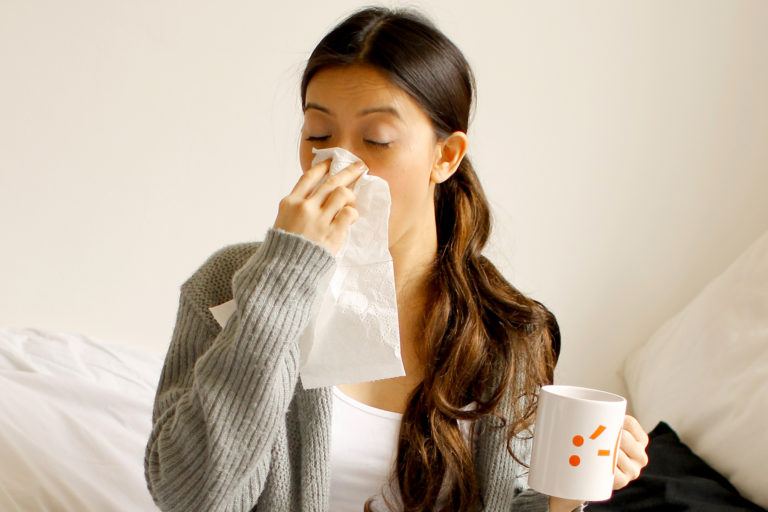
Don’t confuse a stuffy nose with a runny nose, for obvious reasons. Rather, call it a nose infection, a sinus infection, the sniffles, mucus; but whatever you choose to call it, a stuffy nose can be caused by any number of illnesses. There are, however, two possibilities you should keep in mind: bacterial sinusitis and fungal sinusitis. Sinusitis is a general term for a sinus infection; though, as of late, the term is being used to describe a long term sinus infection, something you might not even know you had—or maybe you always did, and didn’t want to bother your doctor with something as trivial as a stuffy nose.
A sore throat, a dry throat, enlarged tonsils, coughing up yellow mucous, a stuffy nose, chronic congestion in your chest and sinuses: these are all symptoms of sinusitis, an infection caused by bacteria or a fungus. Indeed, sinusitis is often the result of a secondary infection caused by a cold or the flu(influenza). When drainage of fluids is hampered by swollen sinus membranes, fungus and bacteria can grow more rapidly, causing a secondary infection, and an even stuffier nose. What this article will attempt to do is teach you how to get rid of a stuffy nose (sinusitis) by presenting to you your options for treatment at home, medically, and naturally. Let us begin with treating a stuffy nose at home.
How to Blow Your Nose
Why is it when you go to a restaurant during the flu or hayfever season, you always end up next to that guy who wants to blow his nose like a goddarned trombone? Doesn’t he know it’s bad for you? Blowing your nose should be a gentle and quiet procedure. Putting excessive force into your nose blowing can tear at your sinuses and increase the pressure put on your sinus membranes, helping you to achieve the opposite of what blowing your nose is supposed to do, while helping everyone around you lose their appetites at the same time.
Best Ways to Get Rid of a Stuffy Nose
Avoid Smoking
The best way to get rid of a stuffy nose is to avoid tobacco and cigarette smoke no matter what. I know from personal experience that cigarette smoke will damage the lining of your sinuses and cause swelling in your sinus membranes, the chief cause of acute or chronic sinusitis. Many smokers suffer from chronic sinusitis and don’t know it, blaming the inflammation and congestion on their habit, when it’s quite possible that an undetected, long-term bacterial or fungal infection is doing more damage every day that it’s allowed to persist.
Take a Decongestant and Ibuprofen
The most common way to get rid of a stuffy nose is to use an over-the-counter (OTC) decongestant combined with an anti-inflammatory analgesic (pain reliever) like Ibuprofen. Some people think that a decongestant is supposed to dry up all the fluid in your nose and make you better. That’s not true. What a decongestant does is taper down the inflammation in your sinuses, allowing the fluid to drain out of your sinuses like it would naturally. Coupled with an NSAID (non-steroid anti-inflammatory drug) like Ibuprofen, a stuffy nose caused by a cold or the flu can be alleviated.
Take an Antihistamine
To get rid of a stuffy nose caused by allergies, an over-the-counter antihistamine should be your first line of defense. Of course, you can’t take antihistamines all summer long, so you should perhaps try to do something about avoiding or removing whatever it is that is causing your allergic reactions–dust mites for example. If you’re dealing with an allergy to pollen, a summer-long antihistamine regiment works fine. If you’re dealing with an allergy to pet dander, it might be time to get rid of cats. Allergy sufferers are often times the sufferers of chronic sinusitis if the sinuses are left untreated.
Get a Humidifer
If you seem to be suffering from a chronically stuffy nose during the winter, you may want to think about getting a humidifier. I’m actually on my way to the store this week to pick one up. I’ve noticed that since the colder air moved in and all of the humidity went away, my sinuses are flaring up. Often times it isn’t sinusitis that is causing your nose to be stuffy all of the time, sometimes it’s just dry air. Make sure to get a steam vaporizing humidifier to avoid dispersing fungal spores and mold into the air. You can order a Vicks steam vaporizer from Amazon.
Don't Use a Nasal Spray
Whatever you do, don’t use an over-the-counter nasal spray to relieve the symptoms of sinus infection. A growing body of research has begun to show that many of the drugs used in over-the-counter nasal sprays are addictive and can actually cause the very symptoms they were designed to get rid of after treatment has ceased. Drugs like Oxymetazoline can cause damage to the lining of the sinuses and chronic sinus blockage if used for more than 3 days in succession. Note that I’m only saying this about OTC nasal sprays. Corticosteroid (non-OTC) nasal sprays are just fine, especially when taken with doctor’s advice, and we’ll address those below.
Medical Treatment for Sinusitis
There are 2 kinds of sinusitis that require medical treatment: acute sinusitis and chronic sinusitis. Bacteria are usually the cause of acute sinusitis, an infection that is often a secondary infection caused by the common cold or flu, which can last anywhere from 2-3 weeks. Antibiotics and corticosteroid nasal sprays are the most common treatments for acute sinusitis. More recently, inhaled antibiotic nasal sprays are gaining popularity among physicians due to a perceived increased effectiveness during treatment, which may be something worth looking into.
Chronic sinusitis (a sinus infection that lasts for more than 3 weeks) is often caused by a fungal infection, but not always. Fungal infections and chronic sinusitis are both handled with corticosteroids, but instead of using an antibiotic, the doctor will usually prescribe an antifungal medication. Either way, be sure to keep your doctor informed about your progress during treatment. The best way to get rid of acute or chronic sinusitis is to keep the lines of communication open with your physician or their nurse.
Best Natural Home Remedies for Stuffy Noses
Saline Sinus Irrigation
Saline sinus irrigation (or saltwater nasal wash) is a perfectly natural home remedy for a stuffy nose. There are plenty of OTC saline nasal drops available at your local drug store, but you might also want to try just gargling with saltwater (saline). Saltwater helps to flush out mucus and kill bacteria. I always feel better after gargling with a little saltwater. Half a teaspoon of salt per cup of water is the recommended solution.
Hot Compress
A moist heat compress applied to your face 3-5 times a day for 10 minutes each time may help relieve some of the symptoms of a stuffy nose. Moisture is always a good thing, and heat helps to dilate the blood vessels and capillaries in your sinuses, which helps your body fight infection. And sometimes it just feels good to lay there with a warm wash cloth on your face.
Eucalyptus Oil
Eucalyptus Oil is commonly recommended to help alleviate a chest cold by expectorating with its effervescence. By the same token, if added to the water of a humidifier or rubbed on ones chest at night or boiled in water and inhaled, it can help to break up some of the mucous in your sinuses, allowing them to drain properly without the use of decongestant drugs. If you go this route, you can find Eucalyptus Oil from Amazon.