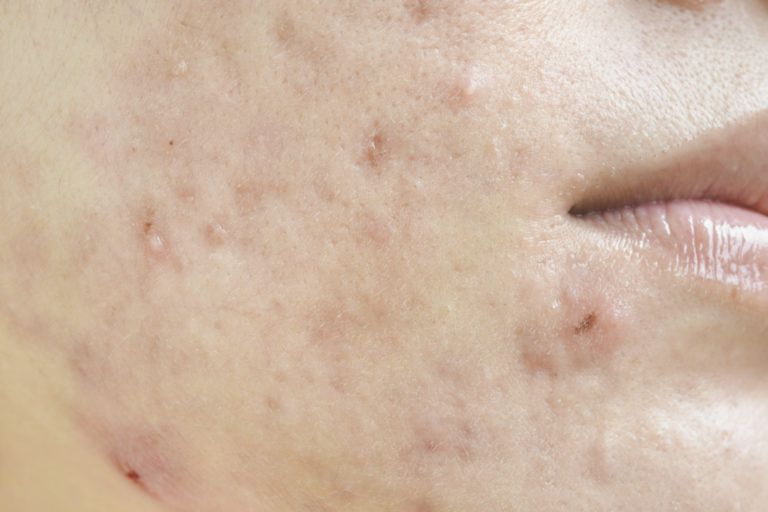
Getting rid of acne is difficult and if there are scars, then it’s going to be tougher. Let’s be honest: the truth is that treatments done by doctors are the best way to tackle acne scars. The way they do this is that they go through the various layers of skin and destroy the scarred sections so that new skin (sans scarring) will come in. Remember, though, that no single treatment is “most effective” for everyone; rather, treatment is tailored to one’s individual scars and skin health. That’s why it’s important to see a medical professional.
We’ve got information here for at-home treatments and professional tactics. While the professional treatments are far more expensive, they are also potentially more effective. But you’ll find no directives here. I’m not telling you what to do but simply presenting a starting point: a list of research-based options for you to pursue further. Discussing things with a dermatologist is the next step.
What’s the deal with scars?
Scars are made up of skin tissue just like any other skin on your body, the only difference being the alignment of the fibers of the collagen are more synchronous and less random. Typical skin cells are woven, almost like a basket. Scars are woven more like rope, making them harder to tear again.
Types of Acne Scars
- Depressed scars fall below the level of the surrounding skin and can be classified according to their size and shape.
- Raised scars (also known as hypertrophic scars) are raised above the surrounding skin.
- Icepick acne scars look like the marks icepicks make in the side of a mountain.
- Boxcar acne scars look like…you guessed it, boxcars.
- Rolling acne scars create a wavy, rippling (and quite aging) texture.
- Keloids can be quite painful and irritating. They happen when a scar becomes larger than the original harmed area of skin.
Best Ways to Get Rid of Acne Scars Professionally
Laser Treatments
Cost: between $1000 and $6000. The laser zaps the top layer, and heats up the inner layer. This helps grow new skin that helps diminish the appearance of scars. The use of this treatment depends on the scarring, your specific skin, and your bank account. Works on ice pick scars, and boxcar scars. Certain pulsed dye lasers also are being used to treat the raised scars. It’ll take two to four weeks to heal after, but folks see continued improvement for months.
Chemical Peels
Cost: $100-$6000. An acid (the “chemical” in the name) destroys the top layer of skin, though may go deeper with a stronger chemical make up. This destruction will cause new skin to start a-growin’. Lighter peels will need to happen every 4-6 weeks, many times. The more expensive kind, especially the full face peel, is treated as a major procedure involving months of recuperation after. The heavier price reflects the stronger acid…but also have the chance at some pretty serious complications.
Microdermabrasion and Dermabrasion
Cost: $50-$300(microdermabrasion) or $1500 or so per session (Dermabrasion). Microdermabrasion is best for depressed acne scars which are smaller. It will be done over short sessions, and there’s no recovery time. Dermabrasion, though, is by far more intense. They’ll use brushes or blades (diamond blades!) to remove the top skin (and the included acne scars), which allows the new unblemished skin to grow. However, because of the intensity, you’ll need a week to heal up.
Fillers
Cost: $500-$2500. Fillers are used on those depressed acne scars, and have gotten better over the last few years. A doctor will basically treat your skin like dented hardwood floors. The wood putty being used is your own fat, collagen, polymethylmethacrylate, or another material. The doctor will putty up your skin with it, no pain and no recovery needed. However, they aren’t permanent. You’ll need to go back over time (the length of which depends on the material used).
Needling (Collagen Induction Therapy)
Cost: free (at home), $200-$500 per session (professional). Hey! A way to help decrease the appearance without destroying the top layer of your skin! Sort of. CIT works by creating hundreds of minute injuries to the acne-scarred skin with the use of a needle-studded roller. The idea here is that to take care of all these new pricks in the skin, your body will heal itself up with collagen and smooth over the older scars. It’s a long term proposal, though: it can take up to a year before results are apparent.
Cryotherapy and Injection Therapy
Cryotherapy ($80 – $150 per scar) involves freezing raised acne scars with liquid nitrogen. The scar tissue dies and slowly sloughs away, creating a smoother appearance. Sometimes it takes one session to get the desired results, and sometimes a dozen visits are required. Cryotherapy is often paired with injection therapy, a treatment in which steroids or other agents are injected into raised scars to create a smoother, flatter appearance. But injection therapy can be a stand-alone treatment, or it can be paired with acne scar removal surgery. Do you see why you’d need the aid of an actual physician in treating acne scars? Acne scar treatment is highly complex and individualized.
Prescription, Topical Acne Scar Treatments
There really aren’t that many topical treatments for acne scars, since scar tissue is simply too tough to expect profound results from this strategy. However, your doctor will know if this is the right course of action for your type of scars. It’s not our place to claim effectiveness or not when prescriptions are concerned.
Acne Scar Surgery
If your expectations are high and your scarring moderate to severe, then you’ll want to at least discuss surgical scar removal with your doctor or dermatologist. Any and all types of scars can be handled with surgery, and can be used with the previously mentioned methods to help get rid of more scarring. Just remember: any surgery is spendy, and will require time to recover. And as with all of the above treatments, if you don’t follow the after-care directions to the letter, you’ll have wasted your time and money.
Best Ways to Get Rid of Acne Scars with At-Home Treatment
Acne Scar Gels and Creams (Depressed Acne Scars)
Cream or gel products containing glycolic acid, vitamin C, or retinol may slightly reduce mild acne scars by boosting the body’s production of collagen, aiding in cell turnover and the growth of new skin, and by correcting mild discoloration. There just aren’t many of them on the market, so do your research.
At-Home Chemical Peels or Microdermabrasion
We can’t really recommend these. It’s not to say they’re not effective, but non-professionals using them can cause more problems, pain, and despair (not to mention loss of cash) than they’re necessarily worth. They’re not as good as the professional ones mentioned above, but they’ll help fade scars. Please, though, talk to a dermatologist before going this route.
Dermal Rollers
Yes, you can use these at home (I mean, they’re rollers with pointy ends on ’em!). The Dr. Roller 1.5mm is even FDA approved. If you use this method, you may want to look into some topical gels/creams. Supposedly they’re more effective after pokey poking your skin.
Silicone Sheets and Gels
Silicone treatments have been shown to reduce the itching and pain associated with scars, and in some cases even reduce their size. Silicone sheets are a popular treatment for raised acne scars. It is thought that the pressure and moisture (and possibly static electricity) help to reduce the size and appearance of scars. But silicone treatments come in gel form as well. There is some anecdotal and small-scale research showing it can reduce both raised and depressed acne scars — especially newer scars.
How to Get Rid of Acne Scars with All-Natural Treatments
Tea Tree Oil
Tea tree oil has been used as a natural acne treatment for quite some time. As a natural astringent, it helps to prevent acne from occurring by killing the bacteria on your face that cause acne. Usually the oil is diluted with another oil-free substance before it is applied to the face. We recommend Maple Holistics Tea Tree Oil from Amazon.
Lavender Oil
Lavender oil is used much like frankincense oil to help improve your body’s ability to create scar tissues and heal wounds. Most vendors of such oils will have directions pertaining to the application of their product to acne scars or any other kind of scars. Majestic Pure Lavender Essential oil at Amazon is a solid choice.
Helichrysum
Helichrysum is a very interesting plant indeed, and the perfect natural remedy for acne scars. Generally speaking, this oil is added to another oil or lotion called “a carrier oil,” which is then spread across the skin. Just don’t use this or other oils (except Tea Tree oil) if you’ve got on-going acne problems. AuraCacia brand Helychrysum can be ordered from Amazon.