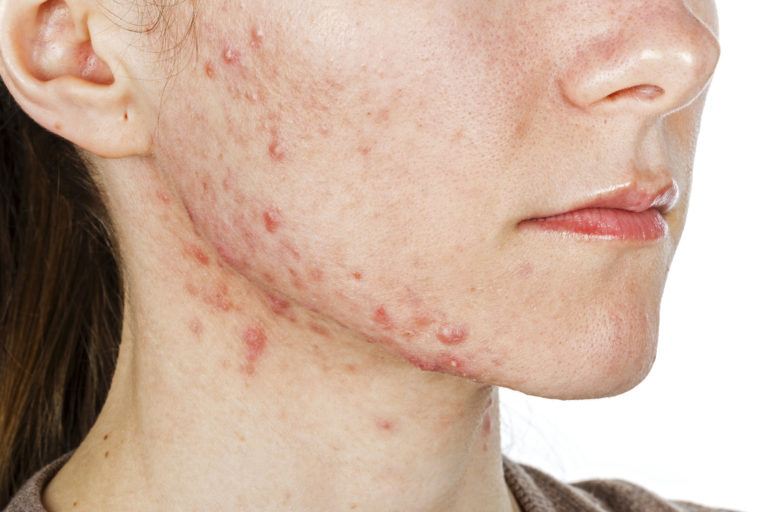
How many of you thought you’d bought your last jar of face cleansing pads, or tube of zit cream ages ago? How many thought we knew how to get rid of acne as teens? *raises hand* Just like me, you thought your days of dealing with acne were long behind you. And yet, here we are, peering into the mirror on a Sunday morning, to find yet another ugly blemish has sprouted overnight, just in time for a brunch with your girlfriends.
A huge factor contributing to on-going acne is based on the fact that acne really is a genetic problem, meaning that you may be more prone to suffer from this disease than other people. With a little bit of patience you can get rid of acne by following these simple suggestions that will help you battle this annoying and sometimes painful condition.
Best Ways to Get Rid of Acne
Check your oil application/intake
First, check what you are putting on your skin that may be causing acne. Oil build-up on the skin is one of the primary causes of non-genetic acne problems, so you will want to reduce the opportunity to get any kind of oil on your skin by changing to oil-free products. Look for make-up and hair products that are oil-free. Also, you can get rid of acne by avoiding topical application of oils, like mechanical oils and greases, as well as cooking oils. If you work in an environment where oils are a regular part of your day, it might not be something you’ve thought about. Even eating greasy foods, like French Fries, and then touching your face, can make it more challenging to get rid of acne.
Switch to an oil-free cleanser
Many acne cleansing products claim to wipe away dirt and oils, while “gently” exfoliating your skin. As long as you avoid topical contact with oils and greases you shouldn’t need these products to get rid of acne. They can actually irritate your skin, damage your sebaceous glands, and cause even worse acne breakouts in the long run. These products actually force your sebaceous glands to overproduce oils because they’re trying to protect your skin from being too dry, cracked, and/or overly clean. There are better, less harsh ways to get rid of acne.
Clean only the surface of your skin
There isn’t a need to remove all the oils from deep inside the pores. By using a mild cleanser, or make-up removing wipes, on a regular basis (at least daily) to remove the oils from make-up and lotions, and keep them from building up and clogging the pores you can get rid of acne. If you’ve been using a facial scrub, be patient. You might not see the results you are hoping for right away. It takes time for your body to restore balance once it’s been out of whack.
Don't pop zits
Warning: I’m about to get gross. I know! Ewww! Don’t pretend like you haven’t stared at the red beacon glaring back at you in the mirror, and against your better judgment, and against all the advice you’ve read about acne, you squeezed it until it popped. The problem with trying to get rid of acne this way is that it doesn’t work. One) your fingers have oils and bacteria on them. Ewww! Two) you could end up damaging the pore and sebaceous gland which could lead to an impacted pimple, or worse, and infected pimple. Ewwww! If you really can’t resist, at least wash your hands before and after you do the deed.
Blackheads are a little harder to pop anyway, so can be less tempting to tackle. Those whiteheads, though, are so easy to pop that it can be hard not to. We understand.
Use acne lotion
Get some acne lotion. It always a good idea to get a professional opinion, seek a dermatologist’s recommendation for a good lotion. These lotions are different from soaps because they’re specifically designed to break down oils, kill the bacteria that cause infected acne blemishes, and promote the sloughing (shedding) of dead skin cells (the other primary cause of acne). Lotions containing the active ingredients sulfur, resorcinol, or salicylic acid are recommended to help get rid of acne.
Seek professional assistance
A dermatologist can use prescription strength topical applications, like retinoids and antimicrobials, to reduce the infections, open up clogged pores, and slough off dead skin. In some cases, the infection is so serious that oral antibiotics may need to be prescribed to get rid of acne. If you’re not ready to make an appointment, there are other options to consider.
Best Natural Remedies for Acne
Tea Tree Oil
Tea tree oil is a good option, especially if you want healthy skin. It’ll get rid of bacteria and help get rid of mild acne. Because it’s anti-bacterial, it acts like a disinfectant. We recommend ArtNaturals Tea Tree Oil from Amazon.
Low-Carb Diet
A Low-carb diet will help freshen up your skin. A lot of food that’s being eaten now is overly processed and full of really crappy carbs. If you cut a lot of that garbage from your diet, it may help with the health of your skin. Plus, it’s healthier for you over all. Australian researchers have shown the connection between the health of the skin and the reduction of carbs. It’s science!
Black Currant Seed Oil
Black currant seed oil is believed that the combination of anti-oxidents and the delicious fatty acids in the oil help get rid of acne. Check with a doctor, though, as the dosage tends to need to be spread out. You can find Black Currant Oil capsules for sale at Amazon.