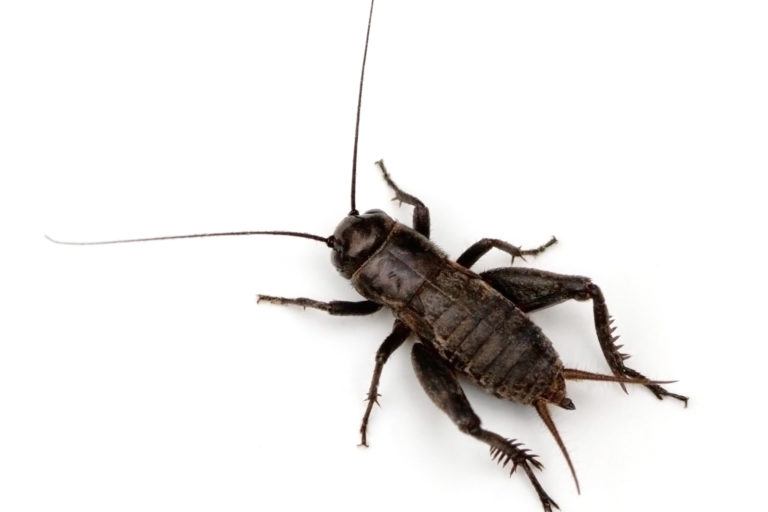
The infamous sound of a cricket chirp. Soothing? Or annoying?
In certain Asian cultures, crickets are revered for their amorous love songs. They are kept as pets and housed in intricately designed cages to bring cheer to living quarters. But this cheer does not translate to the Western world. Rather than whispering sweet affectations, our crickets punctuate awkward silences with snide, sarcastic chirps. Our crickets dabble in torture, mercilessly serenading us with high-pitched squeaks and brazen insults at all hours of the morning, only to fall silent when we pursue justice. Our crickets chew on our clothing and books, not out of need or hunger, but likely out of sheer spite.
And that chirp? It is actually the male cricket rubbing his legs together. It is a piercing sound that seems to comes out of nowhere. Usually all of this just as we’re trying to sleep. So how can we get rid of them to stop these sadists?
But it is important to keep a cool head when facing such an annoying adversary. Put away the gasoline, the firearms, and your improvised explosives. Whether you’re dealing with house crickets, ground crickets, field crickets, camel crickets, or even Jiminy Cricket himself, control is easily achieved even by those with little or no experience combating pests. In this article you will find out how to get rid of crickets using practical, safe, research-based methods.
Cricket Identification
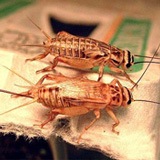 House Cricket
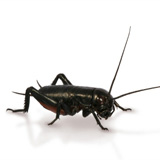 Field Cricket
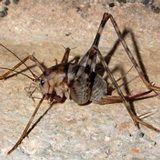 Camel Cricket
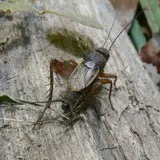 Ground Cricket
Best Ways to Get Rid of Crickets
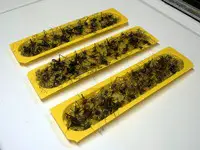
Place cricket traps along walls and in corners.
Sticky traps or glue boards for mice and rats are better at catching crickets than they are rodents. Place a small amount of cornmeal at the center of each trap for bait and set a few traps in offending areas along walls, in corners, near heat and moisture sources, and wherever you’re having problems. They will soon be transformed into ghastly insect graveyards, which make great gifts. If your infestation is small and you’ve worked to pest-proof your home, you won’t need anything more expensive or complicated to control crickets.
Keep in mind, glue or sticky traps are not without controversy. Many feel that the traps are a cruel way for an animal of any kind to die. They make the case that glue traps are inhumane, and that there are far better ways to kill a bug if you must. We are not taking a side, just putting the point-of-view out there.
Crickets are intensely attracted to traditional lighting.
Almost all species of cricket will fly towards light with reckless abandon. You can avoid plagues of crickets on your property and in your home simply by replacing porch lights and lights near windows (even upper-level windows) and structures with yellow “bug lights”, sodium vapor lamps, or amber LED lights, which are far less enticing to insect eyes. You can find a wide variety of sodium lighting products at Amazon.
Another option is being green and using less light during dusk and darkness. Or you can simply use those shutters and window treatments to keep the light inside. No matter what, the more light in an area, the more you will notice that room attracting crickets. They are like moths and other bugs in that regard.
Get rid of crickets in your yard with simple landscaping and sanitation.
To get rid of crickets you need to get rid of elements that attract crickets: cover, moisture, and food. Grasses and foliage, especially around the perimeter of your home or structure, should be cut regularly. Heavy ground cover such as ivy or shrubs should be kept short or done away with.
Leaf litter, mulch, rock piles, brick piles, lumber, old logs, firewood, garbage cans (always sealed) and other cricket and cricket-prey habitats should be kept away from the home. Also be sure to keep gutters free of debris and running smoothly.
Finally, consider creating a “perimeter” around your house, whereby the first 3-4 feet near your house is just landscape rock or dry mulch. You can still plant all the grass, shrubs, or trees that you want… it will just make the area leading up to your house a little less interesting for the crickets.
Pest-proof your home to get rid of crickets.
Crickets get into homes in all sorts of ways, but windows and doors are the main culprits. Use weather stripping and door sweeps for doors, and caulk or screen patches for windows and screens. Next, walk around your home with some outdoor caulk and a caulking gun. Fill in cracks and crevices in the foundation as well as entry points for utilities like plumbing and electricity. Be sure all vents (clothes dryer vents, foundation vents) have screens and are in good working order.
All of this takes a little time and money, but it will prevent future infestations of crickets and all kinds of other insect pests. Best of all, you will not only keep the crickets out, but you will also get rid of asian lady beetles, boxelder bugs, and other nasty invaders.
If you are an adequate DIYer, considering spending a Saturday filling all the gaps in your house. Along the foundation, we like to use a good cement caulk to create an airtight barrier. A simple concrete and masonry sealant, like this one found on Amazon, is what we are talking about.
As for screen repair, it takes a little more time and skill but is very much a DIY job. We like to use the RHO screen repair tape to fix minor screen tears, and then do a full screen replacement once the screen condition gets to a point of needing an upgrade. Find RHO screen repair tape here on Amazon.
Indoors, reduce clutter and moisture.
Clutter provides for cricket habitat and it will always make combating pests much more difficult. More important still is moisture reduction, especially in crawl spaces, basements, attics, and any dark, dank area crickets can breed. Minor construction such as installation of additional vents and vapor barrier may be needed for some homes. In most situations, moisture problems can be remedied with a dehumidifier. Something like the Eva-dry at Amazon may work, but you’ll want to probably get something a bit larger if you’re going whole-home instead of closet or bathroom.
Getting rid of Crickets with Chemicals
Before we talk about chemicals, a quick note. We prefer that you get rid of crickets by simply keeping them out of your house instead of killing them. They are, after all, part of the food chain and important for birds, snakes, and other animals. Furthermore, some of the chemicals that will get rid of crickets are also harmful to bees and pollinators, and we like bees and pollinators. They help pollinate plants all over the earth, including the plants that produce the food we eat.
Pest crickets can almost always be taken care of with the non-chemical methods described above; however, if you are dealing with a plague of these insects, pesticides can help. Where crickets hide in cracks and crevices, insecticidal dusts like Delta Dust Insecticide or diatomaceous earth work well. In basements, attics, crawl spaces, outbuildings, and home perimeters and lawns, cricket baits are often used. NiBan Granular Bait, which consists of boric acid, has gotten many positive reviews from customers, as have Bifen Granule products. Amazon has niban in a 4lb shaker for a reasonable price. Long- lasting residual sprays like Talstar P and Demand CS are also good options if you’re feeling a bit advanced. Whatever you choose, read those labels, as pesticides are only deemed “reasonably safe” by the EPA when used strictly according to the label.
If you’re a landowner dealing with the infamous mole cricket that destroys turf grass in many southern states, you may not have to use toxic chemicals at all. Thanks to research conducted at the University of Florida, an environmentally friendly nematode, Nematac S, is now available from Becker Underwood.
Best Natural and Organic Cricket Control Methods
Vacuuming crickets
If you’ve got a vacuum with a HEPA filter, then you’ve got a great, non-toxic method for collecting (and often killing) crickets. They are a crack-and-crevice insect, so you may need that odd attachment to pull crickets and their eggs out from trim, baseboards, carpet perimeters, wall voids, etc. Be sure to dispose of vacuum contents in an outdoor receptacle.
Our favorite method is actually a small, built-for-purpose bug vacuum. These are inexpensive, small, and easy-to-use. You can find them online, like this model on Amazon. They work for way more than crickets — they will do wonders on spiders and boxelder bugs, too.
Note that crickets may sometimes survive vacuuming. It all depends on your vacuum and how dense the waste load is. If they are still alive, just release them outside. The main goal, after all, is to remove the cricket from your house.
Food-grade diatomaceous earth.
DE offers a slow cricket kill, but it is also food grade and completely safe around children and pets. Lightly dust around windows, trim, corners, along walls, in crawl spaces, attics, and anywhere these pests reside. Crickets walk over it, start leaking, and eventually die. DE can also be dusted over gardens or applied as a barrier treatment around your home.
The molasses cricket trap.
Why hunt elusive crickets when you can lure them to their doom? All you need to effectively trap crickets is a clean jar, molasses, and water. Dilute some molasses with some water and place it in the jar. Set the jars out in cricket-infested areas (indoors or outdoors) and watch as their chirps are silenced in the sweet, soupy mixture. It is a good idea to clean these jars out regularly, as jars full of molasses-drowned crickets can excite the gag reflex. No molasses? Beer will work as a substitute attractant.
The live cricket trap.
Why take them alive? Crickets are a nutritious food for pet snakes and lizards, and if you’re into fishing, they make for effective, attention-getting bait. For catching them in mass, fill a smallish box or container with lettuce and a light source, and leave it partially open overnight in a cricket-prone area. You should be flush with crickets by morning. If you want to capture the few crickets chirping in the basement, leave an open beer bottle on its side with several drops of beer left inside. The crickets will get in but have a hard time getting out.
Once you have the crickets, simply find a place to release them that is far enough away from your house so they will never find it again. If you can release them in a long grass or a wooded area, they will probably have no desire to find your place again anyway. This is probably the method that PETA would approve of.
What is a Cricket's Purpose? Lifespan?
Cricket's Purpose
Is a cricket good for anything? It is a common question. Yes, crickets are important in several ways.
A cricket in the wild can often be found among important plants, flowers or crops, serving the important role of decomposer. It might not be an attractive title, but it is a very necessary one. Crickets eat many seeds and weeds, creating different energy out of those food sources with their waste. The waste, in turn, becomes fertilizer than can allow the desirable crops and plants to grow more abundantly.
It is true that, in extreme numbers, crickets can cause damage to crops by eating the desirable seeds. In more normal numbers, however, crickets are a good creature to have around to complete the crop nutrient cycle.
Further up the food chain, crickets serve as an important food source for many animals ranging from woodpeckers and other birds to mice and moles to snakes and even other bugs.
What is a Cricket's Lifespan?
A cricket’s lifespan is short — they live for roughly the length of one summer than then die.
Most crickets have a pretty predictable life. The are borne out of eggs that are laid the summer before, and spend the winter in a relatively dormant state. When spring arrives, they hatch and begin life as a larvae, turning into a cricket within several weeks. Life as a cricket can be about two to three months long, during which time they normally lay eggs for the next generation. Those eggs then lay in dirt throughout the next fall and winter, and then hatch in the spring. No cricket lives more than one year.
The cycle goes on and on, and that is why we typically have crickets in the summer but not at other times of the year.
