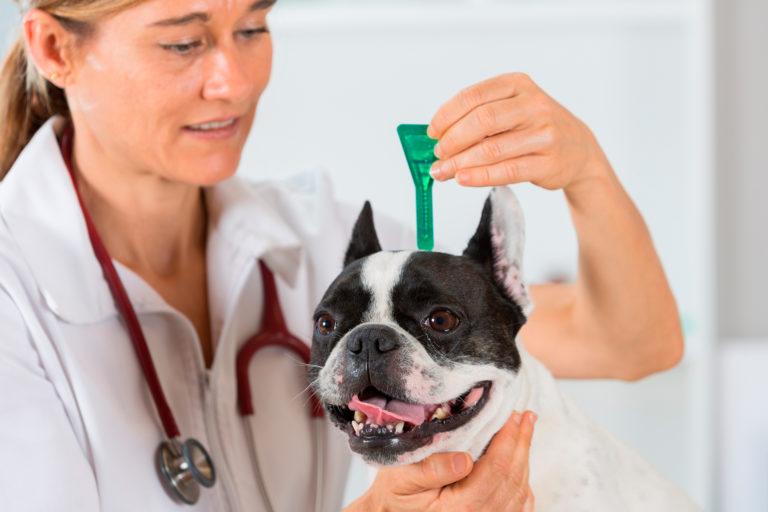
I’ve been lucky. Though my dog has been afflicted with almost everything else known to nature, he has not yet gotten fleas. I’m being proactive though, so the poor dog got a bath, a brushing and some flea repellent all in one day, plus a bunch of sad-looking pictures taken. However, sure as I may be that the fleas are terrified now, I’m still ready to take them on.
Fleas life cycles (3-4 months) are such that, chances are, your dog has only about 5% of them crawling all over him. Unfortunately, that means that the rest are likely in your house and your yard. This may sound incredible, but it’s easy for them to hide: they’re tiny, they have six strong, leap-able legs, they like dark little spaces, and – they spend a lot of their time as either eggs, larvae or pupae anyway. Female adults lay eggs on your dog, and the eggs fall off – in your house or your yard. And the cycle continues. Whether you need to get rid of fleas on your dog right this second or you just want to be prepared, read on for the most effective ways to get rid of fleas.
What is Flea Dirt?
Flea dirt is actually flea poop. Great, huh? It looks like pepper – tiny and black – but upon close observation it will be a rusty-brown color from the dried-up blood it contains. Here’s a good way to check for sure: put a drop or two of water on the dirt, let it soak in, and then smear it on a white paper towel. If the smear is red, you’ve got some dog fleas. Examining your dog for flea dirt is one way to help distinguish between fleas and another skin allergy.
Symptoms of Fleas on Dogs
- excessive scratching/itching
- biting or chewing, especially at the rear, tail and inside or outside of thighs
- hair loss
- skin lesions
- red, raised bumps
- flea dirt
Best Dog Flea Treatment and Prevention Methods
To get rid of fleas, groom your dog regularly.
If your dog has fleas, wash him with a flea shampoo or add some neem oil to your regular stuff. If he doesn’t already receive them, giving your pooch regular baths with a natural flea repellent (neem oil and eucalyptus both work well) will help him ward off the critters and keep them from becoming a problem in the first place. A flea comb is essential when you are in attack mode; the fine teeth will trap the fleas, which will die when you dip the comb in soapy water after each comb stroke. For the moist, infected areas your dog may develop from flea bites (called “hot spots”), try using aloe vera or tea tree oil (mixed with water) to soothe the irritation.
Use a flea repellent to get rid of fleas on your dog.
In the past, I’ve reached for “spot-on” treatments in the pet aisle without a thought. However, recently I’ve become aware of what those toxins might be doing to my dog, to me, to my house, and to my yard. As with many other problems, it’s best to start with something mild and go stronger if needed. You can use Flea Away powder, which is natural, on your dog. You may also try using essential oils on his collar or diluted with water and used as a spray on his coat. Bite This! by Grrroom Dog is an essential oil blend you can purchase, but cedar, tea tree, lavender and citronella oils are effective as well.
Get rid of fleas in your house right away.
There are many sprays and “flea bombs” out there marketed for use in the home, but they can be dangerous and not necessarily effective for all stages of a flea’s development. Vacuuming and cleaning is your safest bet. Be sure to pay extra attention to dark, moist places – and your dog’s bedding – and dispose of your vacuum bag asap (or put flea powder in beforehand) because the fleas aren’t dead in there, just mad. If mere cleaning doesn’t seem to help, try a natural powder like Borax or diatomaceous earth – just protect your eyes, nose and mouth from the dust to avoid irritation.
Get rid of fleas in your yard right away.
If your dog spends a lot of time outside, you can bet there are fleas hanging out there, too. Keeping your grass short and ridding the yard of leaf piles or other “dark, moist places” will help, as will using a natural flea repellent like cedar chips along the fence line or in spots your dog really likes. You can use Flea Away in your yard (usually sprayed through a hose) to help combat fleas, but you’ll need to repeat the process after a watering or rain. You may also consider trying Beneficial Nematodes (tiny worms), which will kill your fleas as well as other undesirable pests in your yard.
Feed your dog a healthy diet to get rid of fleas.
Fleas really like poor, defenseless creatures like kittens and puppies, or malnourished ones, because of their weak immune systems. Many people believe that a raw diet is best for dogs because it is biologically natural to them; however, you may not want to go this route. If you prefer regular dog food, try to avoid chemical preservatives, food coloring, by-products and digests, and look for meat as the first ingredient. Especially during flea season, supplementing your dog’s diet with garlic or brewer’s yeast (in powder or tablet form) can keep fleas away because of the taste. Also, your dog will be protected from traditional vampires. Too much of either can be toxic, though, so check with your veterinarian about appropriate amounts.
Additional Help to Get Rid of Dog Fleas
There has been a lot of talk, especially lately, about the dangers of using pesticides on household pets. Many products are made with toxins that inevitably seep through your pet’s skin, as well as yours and that of others who come into contact with your dog. Flea collars especially are best to stay away from; they’re really only effective around the neck area, but the toxins can rub off on anything. If you discover that the methods I’ve described above do not completely take care of your dog flea problem, however, you do have other options – some of them safer than others. Advantage and Frontline Plus are both topical flea control products that stop flea bites in a matter of minutes and kill adult fleas, eggs and larvae in hours. Sentinel and Capstar are pills that will help control fleas; Sentinel is administered monthly and is also used for heartworm, and Capstar can be given daily.
For young puppies that have fleas, it is best to visit your veterinarian. Also, seek help immediately if you notice any signs of chemical poisoning in your dog such as drooling or shaking. For fleas in your house or yard that won’t leave, consult a good exterminator – just make sure you inquire about what is being used and in what ways.
Best Natural Ways to Get Rid of Fleas on Dogs
Eucalyptus is effective in dog flea control because fleas can’t stand the smell of it.
Be careful not to apply it directly to your dog, however, because it is strong and can be irritating. Instead, try mixing ten to fifteen drops of eucalyptus oil with water and use it as a spray on your dog’s coat. You can also add the oil to the final rinse when washing your dog’s bedding, place eucalyptus leaves under furniture or rugs and even try a eucalyptus wool wash when washing your dog. So many uses! I bet koalas don’t have a flea problem.
Note: Eucalyptus shouldn’t be used around cats.
Homeopet Flea Bite will help heal your dog’s itchy, irritated skin.
It comes in a liquid form that you can add to your pet’s food and water or directly in his mouth. It is safe for all dogs and cats – even puppies and pregnant or nursing females – but just be sure to pay attention to the dosage according to size. On a side note, be aware that Homeopet won’t be as effective if you are also using essential oils as flea repellent. You can get Homeopet Bite relief from Amazon here.
Flea Traps can help you assess the magnitude of your flea problem, and they can also help you catch and kill fleas.
You can purchase a flea trap that works by attracting fleas to a sticky substance that then kills the fleas. You can buy these traps from Amazon. It is just as easy, however, to make one yourself. In areas your pet frequents – like her bed – simply put a light next to a shallow dish of warm, soapy water. The fleas will jump towards the light and land in the water, the soap acting as a barrier. Keep in mind that, unless you have a very minor flea problem, this method of dog flea control won’t completely wipe them out; it is best to combine it with other methods.