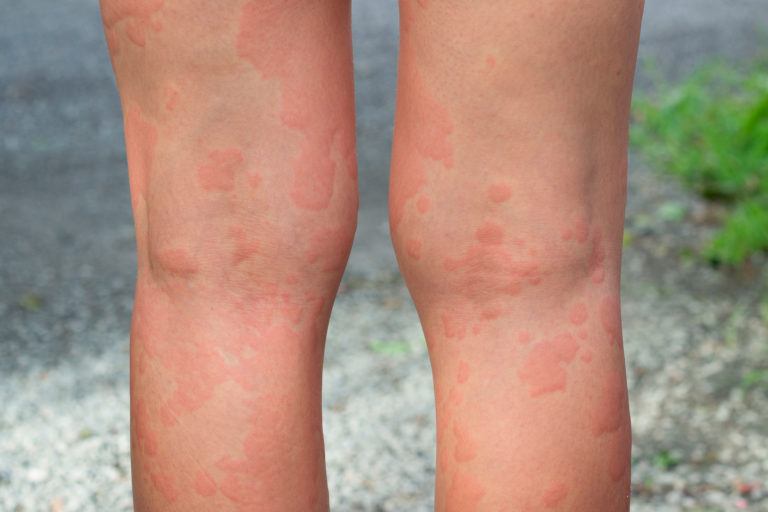
People who get hives tell me that they’re unpleasant. Sometimes they cause itchiness, sometimes they cause burning and your lips start to swell. Red patches bloom on your skin. If you were eating seafood with an extremely good looking person, chances are pretty doggone good that the evening is ruined. Here’s some info on how to get rid of hives so that it doesn’t ruin your next changes with Mr. (Or Mrs.) Right.
The plus side is that Hives tend to go away fast, and are easily treated. They are a common condition and are usually caused by an allergic reaction, or by your body fighting off a viral infection. About 1 in 5 people will get hives at some point, so it’s pretty understandable when it happens. Keep reading for help to figure out what’s going on, and how to get rid of hives. You’re on your own when it comes to Mr/Mrs Right, though.
What Are Hives?
Hives are a common skin condition causing itchy red or white bumps that appear in patches that can range from a pin head to a dinner plate on your skin. They can sting or burn, and in some cases can cover 100% of your body. Hives can cause some fairly serious issues like swelling of the lips, tongue, or eyes and cause problems with breathing or swallowing.
Common Causes of Hives
- Food allergies
- Viral infection
- Skin irritation caused by lotions or cosmetics
- Nickel jewelry
- Stress
- Insect bites or stings
- Exposure to extreme temperatures
- Exercise
- Pregnancy
- Sunlight (in rare cases)
Best Quick Relief for Hives
A cold wet washcloth is the cheapest and easiest ways to get relief from hives. If you don’t want to wait on the washcloth cooling down, you can use ice cubes directly on the hives.
Best Ways to Get Rid of Hives
Take an antihistamine
When hives are caused by an allergic reaction, they’ll likely disappear on their own within a few hours. If you need quicker relief, an OTC drug that contains Diphenhydramine is considered most effective at treating hives. Diphenhydramine goes by the brand name Benadryl (which you can get at Amazon), but there are also generic equivalents. Be sure to always follow the recommended dosage and instructions listed on the medicine’s label. Most antihistamines cause some drowsiness, so it’s best to take them before bed if possible.
A lukewarm oatmeal bath
The itching that hives causes can sometimes be maddening, and oatmeal can help a lot. It has oils/nutrients that changes the pH balance of the skin, which then in turn helps reduce the itchiness. You can get an oatmeal bath solution, or you can make your own…just grind one cup of oatmeal in a blender until it’s fine powder, then sprinkle it into running bathwater (that way it doesn’t clump up). Soak for up to 20 minutes. For kids or tiny tots, use 1/3 cup of oats. Hot water can prove irritating, so keep it moderate and lukewarm.
If hives are constant, talk to a doctor
If 6 weeks have gone by, or if they’re pretty frequent, you should speak to a professional. Check with the general practitioner, as they’ll help you find a specialist that is right for you.
If hives accompany serious reactions, go to the ER
Watch for symptoms such as throat tightness, difficulty breathing, wheezing, persistent vomiting, chest pains and extreme light-headedness. If any of those signs are present and appear to be getting worse, head to the nearest ER or call 911.
Best Natural Remedies for Hives
Aloe vera
Aloe vera is great if you’ve got some irritated skin, plus it will moisturize. It tends to be better smelling than most medicinal creams, and it will help relieve itching. You can get 100% Aloe Vera Gel from Amazon.
Milk of magnesia
Applied with a cotton ball or rag, a dab of Milk of Magnesia will relieve itching.
