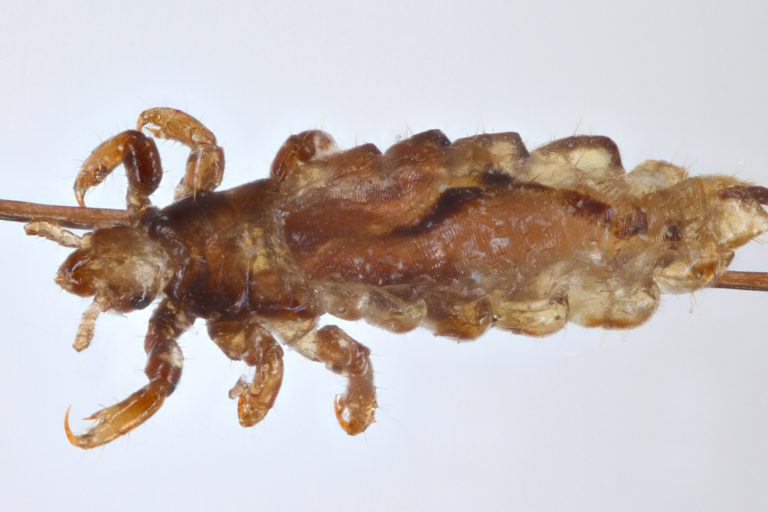
A lot of people don’t know it, but getting rid of lice is more complicated than it may seem, especially since there is more than one variety that infests the human body. There are three types of lice, in fact: head, body, and pubic lice and, of course, the nits that accompany all three. Head and body lice are the same species (Pediculus humanus) but vary in size and behavior, while the pubic lice (otherwise known as the crab louse) is its own species of sexually transmitted lice.
Head lice (Pediculus humanus capitis) are perhaps the most common form of lice in humans, infecting thousands of school children each year. Pubic lice come in a close second with regard to number of infestations, and body lice a very distant third. Although body lice (Pediculus humanus corporis) are not as common as either pubic or head lice, the possibility of a body lice infection shouldn’t be discounted. The following information will help a lot.
More Lice Topics
Types of Lice and Removal
Use Nit Combs for Head Lice
To get rid of head lice mechanical removal with a nit comb is the first step recommended by public health officials. You should only use pyrethoids or insecticides if you can absolutely confirm a lice infestation, and then repeat the treatment in 10 days to get any eggs that haven’t hatched because permethrin and pyrethoids don’t kill the eggs. The effectiveness of a pyrethoid treatment can be increased by complementing the shampoo treatment with a thorough nit combing procedure. Wash bedding, hats, and clothes in hot water and dry with heat.
Use Hot Water for Body Lice
To get rid of body lice one should wash their clothes in hot water and dry their clothes at a high temperature. Body lice are rare in the U.S., but infestations do occur (usually among individuals who do not change clothes often). Body lice lay their eggs and hide in the seams of your clothing. So, you should do your laundry in hot water to kill both the them and their eggs. You should also dry your clothes in a hot dryer and iron anything that can be ironed. Any clothes or articles that cannot be washed should be frozen for a period of no less than 3 days. Pyrethroids and permethrins are not usually prescribed for a body lice infestation because body lice do not reside on the skin, usually.
Use Combs for Public Lice
To get rid of pubic lice (Pthirus pubis) mechanical removal with a comb or some other utensil is recommended. Problems with pubic lice begin when a person has particularly dense pubic hair or cannot see clearly their genitalia. Then it is, perhaps, in the interest of the person suffering from crabs to seek medical help, usually in the form of a pyrethroid or permethrine shampoo or cream treatment. As is the case with head lice, pyrethroid and permethrine treatments should be applied twice: once to get rid of the initial infestation and again two weeks later to kill any newly hatched nymphs. Clothes and bedding should be washed in hot water and dried in a hot dryer.
Confirm Lice Infestation
Mechanical removal of lice is always the preferred treatment initially because insecticides are bad for your health. Granted, it may take hours, even days to complete the job of grooming the infested person, but it is worth the time. Often times dandruff or another random bug caught in the hair is misdiagnosed as a lice infestation. Using a nit comb, a bright light, and a magnifying glass may in fact reveal that your child or patient is not infested with head lice but suffering from another affliction.
Wash Clothes
Washing clothes, hats, and bedding in hot water to get rid of lice is standard protocol with almost every lice infestation.This is particularly true of body lice, since body lice and their eggs are rarely found on a person’s body. Heat has been found to be one of the most effective ways to kill head lice, body lice, and pubic lice (almost all forms of lice) because they are particularly susceptible to extreme fluctuations in temperature. In fact, a good way to follow up a pyrethroid or permethrine shampoo treatment is to dry the hair with a blow dryer set to high heat.
Can you get head lice from pets?
You’ll be happy to know the answer to this question is a definite no. Head lice (Pediculus humanus capitis) feed on human blood and human blood alone. They cannot be transmitted any other way than from contact with other humans. Regardless of what people tell you, pets cannot carry head lice, at least not the kind of head lice we can get.
Best Methods for Lice Control & Prevention
Avoid Sharing Personal Articles
If you don’t want to get a head lice infestation you should avoid situations where there is intimate contact or personal articles of clothing are exchanged. The most common way for head lice to be transmitted is for a person who already has head lice (and perhaps doesn’t have enough of them to notice) offers someone else the use of personal articles like a hair brush after recent use, or a winter hat, or a baseball cap. If you want to prevent a head lice infestation in your home, tell your children to keep their hats, coats, and other articles of clothing to themselves.
Check Your Children for Lice Regularly
Putting your child in with a large group of children in a confined place (think public school) is like sending them to a head lice farm. Since head lice can only be transfered from one human to another, it’s best to keep an eye on kids at camp or in school. Trust me, I used to work at a camp for kids, and head lice scares were a weekly occurrence. In fact, the nurse told me while I was getting a finger sewn up that head lice was the biggest health problem she had faced at youth camps. Have your children checked for head lice at least once every two weeks, and if any are found, notify the school or camp director immediately. Chances are more than one child will need to be treated for head lice.
Use Permethrin Shampoo
A permethrin shampoo like Rid or Nix will get rid of head lice. If prevention of head lice just isn’t possible and you find head lice on your children or yourself, you should treat the infested person for head lice immediately with a head lice shampoo. Rid (which you can get at Amazon), Nix, and just about anything with permethrins or pyrethrins will get rid of head lice. Another, less common, head lice treatment is lindane. Most over-the-counter head lice treatments have a 1% concentration of this active insecticidal ingredient, so there isn’t really much of a health risk.
Wash Your Beddings and Clothes
Washing your bedding and clothes in very hot water will get rid of head lice if you’ve come across an infestation. As soon as you find head lice on either yourself or a family member, and after you’ve washed with pyrethrin or permethrin, you should wash all of the bedding the infested individual has come in contact with. Articles of clothing worn in the past week should also be washed to help prevent a reinfestation. Very hot water in both the wash cycle and the rinse cycle (if possible) is recommended, as well as setting the dryer to high heat when drying the fabrics in question.
Thoroughly Vacuum
To get rid of head lice infestations, thoroughly vacuum places where people rest often. You’ll want to vacuum like the dickens in your house. Vacuuming beds, couches, chairs, and carpets will help suck up any head lice that have escaped the washer/dryer holocaust. Using an agitator on carpets and a bristled attachment on furniture are both recommended, to help uproot any stubborn adult head lice or even nits that may have fallen off and gotten stuck on fabrics or upholstery around the house.
Lice Remedies
For particularly resistant head lice, there are 5% head lice remedy concentrations available by prescription. Chances are you won’t need something that strong because 1% concentrations are often more than enough to kill a few head lice, and there are any number of head lice remedies and treatments available online. Things haven’t changed much since one biologist said to the other, “Hey if this stuff kills boll weevils like hell, maybe we should put it in a shampoo!” And it’s precisely the fact that you’re putting a toxic substance (one of the most common insecticides on the market today) in your hair that some things should be noted:
- If you’re pregnant or you think you’re pregnant, or you’re breastfeeding, you shouldn’t put this stuff on your skin.
- If it’s causes you to break out in hives or rashes, or you drop to the floor gasping for air, you shouldn’t put this stuff on your skin anymore.
- Aside from those two things, pyrethrin- and permethrin-based head lice treatments should be just fine for getting rid of head lice.
Wet Combing Lice
This technique is a form of the mechanical removal of lice we suggest further on in the article. This method has been singled out because of its effectiveness compared to other mechanical louse removal methods.
- Find a metal nit comb with no more than .3 mm of space between the teeth.
- Wash the hair clean and then apply an oil like olive oil to the hair to lubricate.
- From scalp to hair ends, carefully comb through every square inch of the person’s head, twice, rinsing lice and nits away when they are found.
- Shampoo the oil out of the hair and carefully wash the nit comb as well.
- Repeat this process every day until no lice or nits are found during treatment.
Natural Lice Control
Olive Oil
Olive oil is seeing an increase in popularity as a natural remedy for lice infestations. To perform this treatment, cover the infested person’s head in olive oil (and I mean drench it), covering it with one of those plastic hair covers and rubber band. Let the oil sit for no less than two hours—some people say three—and then wash the oil out. Follow this up with a thorough nit combing and you may never need to use insecticides again.
Heat Treatment
Heat treatment, as I’ve mentioned in the article already, is a great natural, chemical-free, way to get rid of lice. Using a blow dryer or a hair straightening device, or even a hair curler can certainly be an effective way to kill lice and their eggs. The problem is, it’s hard to get these devices close enough to the scalp to get the newest eggs without getting burned. Follow this treatment up with a nit comb to ensure a chemical-free lice remedy. There is a product coming to market that is apparently called the LouseBuster which uses heat to kill lice and nits as well.
Freezing
Freezing temperatures have been known to kill lice and their eggs as well. We see this tactic used to kill round worms and tapeworms in fish, but I don’t think you want to put your child in the freezer, do you? Well, if you have anything that can’t be washed or some object that you’re certain is infested, throw it in your freezer for a week and then wash it.
Electronic Lice Combs
Electronic lice combs are produced by companies like LiceGuard and are apparently far more effective at getting rid of head lice and nits. If you’re not into pyrethrins, permethrins, and other chemical head lice treatments, you may want to consider investing in an electronic lice comb. They’re not too spendy, like this one from LiceGuard at Amazon.