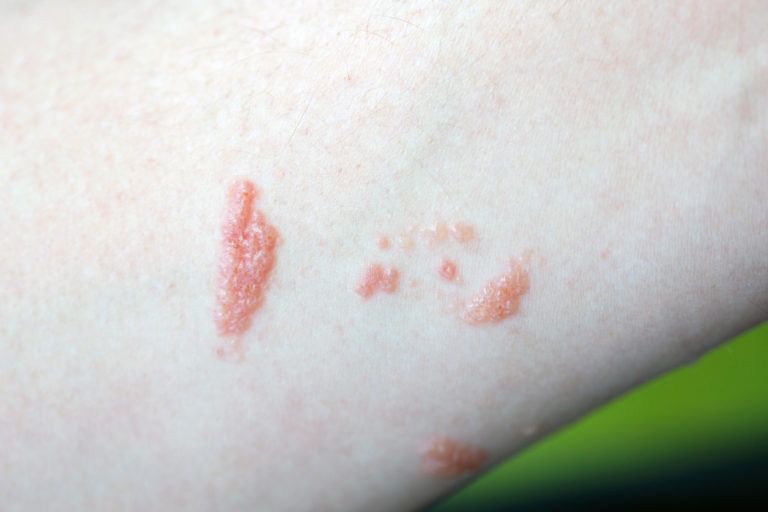
I consider myself lucky to have never experienced (knock on wood) the agony that is a poison ivy rash. I have, however, seen plenty of family and friends wander off into thick fields of poison ivy plants to know that it is imperative to prevent and/or treat a poison ivy rash as quickly as possible in order to minimize the irritation and pain. Like poison oak, it can be dealt with, most times without professional medical help.
Of course, the best way to avoid suffering from poison ivy is to prevent it, and I’ve included a list of suggestions for how to prevent a poison ivy rash. Once you’ve contracted a poison ivy rash, effective treatment is all about acting quickly and thoroughly treating the infected area, which can include areas where the rash hasn’t broken out yet. Althought you may not be able to get rid of the rash immediately or completely, easing the symptoms of irritation will help you to itch and scratch at the rash less, which will help you to heal faster. The following suggestions should help you get rid of your poison ivy rash quickly with as little pain a possible.
Identifying Poison Ivy & Poison Ivy Rash
Poison ivy grows as a vine in some areas of the U.S. (East, Midwest, and South), and as a shrub in other areas (Northern, Western, around the Great Lakes). Each poison ivy plant has three distinctive leaves.
About three in every four people are allergic to urushiol. A reaction to poison ivy usually comes in three stages and can last anywhere from a few days to a month, depending on the severity of the reaction. Look for these symptoms:
- red, itchy skin
- a rash breaks where the skin touched the poison ivy plant
- the rash progresses into red bumps and oozing blisters
What Causes Poison Ivy Rash
Poison ivy, and other poisonous plants such as poison oak and poison sumac, contain an oily sap called urushiol, which sounds like an evil monster from Tolkien. When urushiol contacts the skin it can trigger a form of allergic contact dermatitis, a swelling and irritation of the skin that usually takes the form of a very itchy rash. While no visible reaction may occur the first time your skin touches poison ivy, your immune system will build up a sensitivity and react the next time you contact poison ivy.
Direct contact with any part of the poison ivy plant can cause a reaction, as well as contact with any object that has touched the plant (such as a garden tool or pet fur). All parts of the plant — leaves, stem, roots — contain the urushiol, and the urushiol remains potent even after the plant has died. Burning poison ivy plants will release the urushiol into the smoke, which can cause a serious allergic reaction in the nasal passages, throat, and lungs if inhaled.
Best Ways to Treat a Poison Ivy Rash
Wash Everything
As soon as you think you may have been exposed to poison ivy, wash anything and everything that may have touched the plant. This includes your hair, your body, your clothing, your pets, and any equipment that touched or could have touched the plant. Wash your clothing separately from other clothing or materials not exposed to the plant. If you think the poison ivy may have touched your hands, or if you’ve been handling exposed materials with your bare hands, be sure to scrub thoroughly between your fingers and beneath your fingernails. If you’re camping, or spending a long period of time outdoors, clean all of your equipment with fresh water and soap. In addition to soapy water, use a solvent like rubbing alcohol (isopropyl alchohol) to help separate the urushiol oil from your skin and equipment. Washing thoroughly will remove some of the urushiol before it can further contaminate you or your things, and may help to reduce your oncoming poison ivy rash.
Use a Cool Compress
Use a cool, wet compress to soothe the poison ivy rash. Soak a towel or a washcloth in cold water, or wrap the cloth around ice cubes. Cool milk may be more soothing than water; the fat in whole milk (don’t use skim milk) relieves the itching and burning in the rash. An OTC preparation such as Burow’s solution (a pharmacological preparation made of aluminium acetate dissolved in water) has antibacterial and astringent properties that can also relieve the symptoms of your poison ivy rash. Applying a cool compress or ice cube to your rash works to cool the skin, reducing the heat of the rash, and compressing the blood vessels, which diminishes itching and the production of more blisters and oil. The sooner you stop itching, the sooner your rash goes away.
Apply Lotion
Apply soothing lotions such as calamine directly to the poison ivy rash. After applying the cool compress to your poison ivy rash, spread calamine or a similar lotion over the affected area. These lotions work to relieve your itching and dry up the blisters and oily bumps of your rash. Be sure to check the use by date on your lotion bottle; calamine lotion does expire, and won’t be able to soothe your rash after its expiration. Aveeno Anti-Itch Cream with Natural Colloidal Oatmeal, Band-Aid Anti-Itch Gel, and Aloe Vera Gel are other viable options for gentle topical creams to relieve your itching. You can get 100% Aloe Vera Gel from Amazon.
Take Antihistamines
OTC oral antihistamines will relieve some of the symptoms of your poison ivy rash. Benadryl is a well-known and effective oral antihistamine that soothes allergic symptoms such as the itching, burning, and swelling associated with poison ivy rashes. If you aren’t familiar with oral antihistamines, start with a small dosage and work your way up until you feel relief; if you feel unsure about the dosage ask your doctor or a pharmacist before taking the medication. Oral antihistamines can cause severe drowsiness and other symptoms that can impair your ability to work, drive, or complete other daily tasks. Topical antihistamines may cause further allergic reactions in sensitive skin, so avoid using these products on when a poison ivy rash unless you are familiar with them.
If you are in an area known for poison ivy, keep some Benadryl lotion handy. You can find it here on Amazon.
Be Gentle
Be gentle on your poison ivy rash as you’re waiting for it to heal. Once you’ve developed a rash from poison ivy, you can treat the symptoms, but nothing will really heal it but time. The gentler you are on your irritated skin, the faster it will heal. Try not to scratch your rash, don’t break new blisters open, and keep your rash open to the air. This will allow the infected oils in your skin to dry out, reducing the inflammation and irriation as quickly as possible.
Medical Treatment for Poison Ivy Rash
If the symptoms of your poison ivy rash are particularly torturous or nonresponsive to the above treatments, you may want to ask your doctor for a prescription-strength treatment. Your options include topical and oral steroids and allergy shots designed to prevent further outbreaks of poison ivy or orther poison plant reactions. A doctor can also drain large blisters for a decreased risk of infection.
You should also consult a doctor if you experience any of the following serious symptoms: severe swelling, difficulty breathing, rash covering more than one fourth of your body or any part of your face or genitals, an infected rash with increased sensitivity, colored pus, or an odor.
Prevention of Poison Ivy Rashes
Learn to Identify Poison Ivy
Learn to identify and avoid touching poison ivy (and other poison plants). Cover exposed skin by wearing long pants and long sleeves, gloves, shoes, and socks when outdoors in areas with a lot of poison ivy growth.
Try Deodorant
If you know you’ll be in areas with a lot of poison ivy, but can’t or don’t want to wear protective clothing, try rubbing or spraying deodorant on any exposed areas of skin. Some dermatologists believe that aluminium chlorohydrate, the active ingredient in deodorant, protects your skin from the urushiol oil.
Remove Poison Ivy Plants
Remove poison ivy plants from your yard, especially areas where you or others you come into contact with work or play in frequently. We did an entire piece on how to get rid of poison ivy plants. Check it out.
Watch Children and Pets
Don’t allow your pets or children to run unattended in areas with a lot of poison ivy. If you do, be sure to wash your pets thoroughly before touching them with bare skin, and make sure your children follow the protective measures above.
Best Natural Treatments for Poison Ivy
Oatmeal Bath
Make an oatmeal bath to ease your poison ivy rash. Add 5 cups of oatmeal to a cool bath and soak for up to half an hour to ease the itching. Baking soda will also work in the place of oatmeal.
Epsom Salts
Make a paste out of epsom salts, baking soda, or oatmeal (mix with water or milk) and apply it directly to your poison ivy rash for relief. You can purchase Epsom Salt at Amazon.
Is a Poison Ivy Rash Contagious?
Good News: The poison ivy rash is not contagious. The reason you get a poison ivy rash is because you came in contact with urushiol oil. It is the oil on a poison ivy plant that gets on your skin, and gives you the rash. Unless you have fresh urushiol oil on you, and touch someone else (within a very short amount of time), it cannot be passed on.
Someone who has a case of poison ivy is not going to just give it to someone else just by touching them. You have to get it from the plant.
