Getting rid of rats is crucial when you find that you have the repulsive rodents around.
Rats have plagued humans throughout the world millennia. They can contaminate air and food, destroy property, carry a number of diseases, and act as hosts to insects that pose health risks. I don’t know why Disney insists on trying to turn them into cute and lovable characters. The two main species of rat that are bothersome to homeowners in the United States are roof rats (a.k.a. black rats), which are found mainly in coastal areas, and Norway rats, which are found throughout the country. Roof rats are often found in attics and eat things like fruits and vegetables, while Norway rats are generally found on ground levels and prefer meats and fish. Rats can eat through almost any material when they’re determined to get somewhere, and an opening the size of a quarter is all they need to squeeze themselves into your shed, garage, or home.
Getting rid of rats isn’t a fun task, but a small rat problem shouldn’t be too hard to take care of if you follow these steps for prevention and extermination. You do not want to let it become a big rat problem. The good news is that the same steps that will rid your building of rats will probably help keep mice out.
Rat Identification
There are two main types of rats that you will likely find yourself dealing with. While there are many more rat species in the world, the odds are that you will be dealing with a brown or black rat.

Norway Rat (Brown rat)
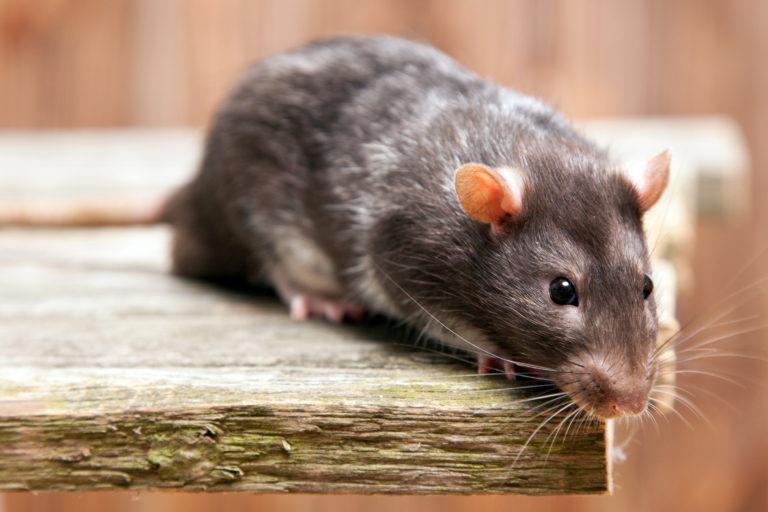
Norway rats are very common. They are brown, and have a long tail that is about the same length as their body. With the tail, they can be over 20 inches long. Norway rats are the rats that can sometimes be domesticated (not sure why anyone would do that) or used a lab rats.

Black Rat
Black rats are smaller than brown rats, and less common. They are often the rats that find their way in to and on to sheds, shops, and garages. They are often mistaken for an overgrown mouse.
Best Ways to Get Rid of Rats in a Shed
Getting rid of rats in your shed, shop, or garage requires immediate action. Rats have a way of settling in, and you certainly don’t want them having babies in your attic, walls, or basement.
Remove their food and shelter
The first step to getting rid of rats is to stop feeding and hiding them. While rats may prefer certain foods, when they’re hungry, they’ll eat just about
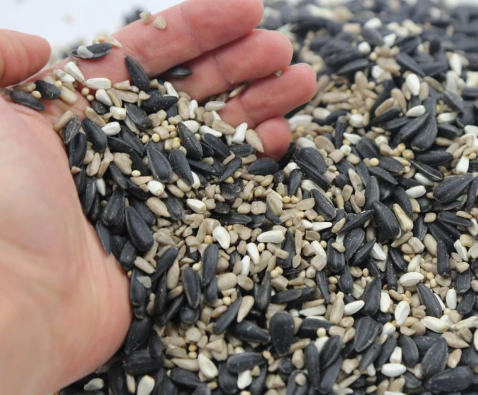
anything. Look around your shed or garage, outdoors and indoors, for things rats may eat and places they may hide. Things to look for outside include compost piles, bird or squirrel feeders, and pet food and waste. Inside your home, keep food in tightly sealed containers, clean up after meals, make sure you have tight lids on your trash cans, and try to keep your home and yard clean and uncluttered. While this alone probably won’t get rid of the rats, it should help your home become less attractive to them.
For an old workshop or lawnmower shed, keeping food away will be easier. For garden sheds though, with seeds and other organic matter, it gets harder.
Find entry points
A rat only needs an opening the size of its head to squeeze into your structure. This means that any openings the size of a quarter or larger are potential access points. While you’re trying to prevent rats from getting in, you may as well protect your home from mice as well, which only need a quarter of an inch, or about the size of a dime. Walk around the exterior of your shed or shop, looking for possible entry points. Look near the foundation, near entrances to crawl spaces, around vents, under doors, and anyplace where plumbing or wiring goes into your home, and check your siding for gaps.
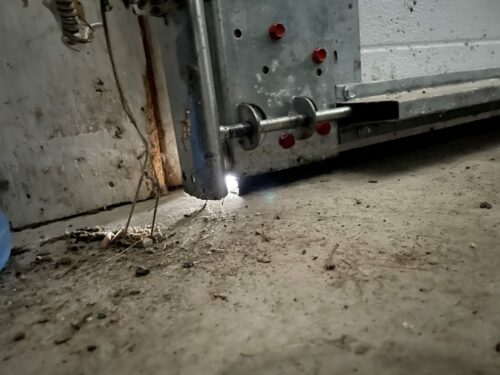
If your shed or garage is unfinished, one tip is to go inside on a very bright, sunny day, and turn all of the lights off. You should be able to easily see the gaps where light is coming in. Those gaps could also be where mice or rats are entering.
Block access
Anywhere you find these openings, you’ll want to seal them off. You’ll need caulk and steel screen mesh or steel wool to fill gaps on your exterior walls, and weather stripping and door sweeps to cover any spaces under exterior doors. If you don’t already have these materials, they can be found at your local hardware store. Trimming shrubs and tree branches away from your home may also prevent rats from entering the upper levels of your shed. Keep in mind that rats can climb and jump, so any openings near the attic should also be sealed off.
Why not just use insulation or caulk to block access? A rat can easily gnaw through that stuff.
Some steel wool is made specifically for this purpose, tough enough so a rat cannot gnaw on it and it will stay put. We like the Xcluder product. You can find those here on Amazon.
If you are dealing with a larger pole shed, you might have more work to do. Those sheds often don’t naturally seal, so you might need to spend some time and money modifying the base of the buildings.
Plan your attack
Now that you’ve stopped more rats from entering your shed or shop, it’s time to take care of those that are already living there. When you cleaned up, you probably found out where the rats have been traveling. Areas where you’ve seen rat droppings or brown streaks along your baseboards are where you’ll want to put your traps.
To trap the rats, you’ll want to go for a big kill, so make sure to get plenty of snap traps (you’d rather have extra than not enough). You will need more than one. A rat is quite smart and will notice a trap in its environment. You need to set out several in the hopes that they overlook one of them.
We like the reusable ones made by Tomcat. Easy to set, and a strong spring action. Find it here on Amazon.
Trap the rats
Bait the traps with peanut butter or another food that won’t spoil quickly and put them against the baseboards along the rats’ pathways so they close towards the wall. Don’t set the traps yet. You’ll want to bait the traps until the rats are comfortably feeding off them. The rats may be hesitant to feed off the traps and if one is killed, others won’t likely take the bait. After a few days of feeding the rats, set all the traps on the same night and wait. Continue trapping for about a week, and your rat problem should be taken care of.
Remove the rats
You’ll want to wear rubber or latex gloves throughout this step. Mix a disinfectant solution of one part bleach to ten parts water and spray the rodents’ bodies. Then you’ll want to soak them in a bucket of this solution for five minutes. Put them in a plastic bag, seal it, and put that bag into another plastic bag and throw that away. You’ll also want to get rid of anything that has been contaminated by the rats and can’t be sanitized, such as cardboard boxes. If they have been living in an attic, you’ll also want to throw away and replace any insulation that they have soiled to prevent stench and bacteria.
Sanitize the area
Before starting to sanitize, open windows and doors and leave the area for at least thirty minutes. Don’t sweep or vacuum droppings or nests because this can stir up droppings and urine, and the dust from rat dropping could be contaminated by some pretty serious diseases.
Instead, use your disinfectant to spray the area and let it sit for five minutes. This will wet everything down and reduce the chances of dust from the droppings becoming airborne. Then clean up with a paper towel or rag. Disinfect anything that may have been contaminated by the rats, including floors, countertops, cabinets, carpets, clothing and furniture. Carpets and furniture can be steam cleaned, and clothing should be washed in hot water and dried with heat. When you’re done, throw away your paper towels, rags, and gloves and wash up well.
Rat Traps and Poisons
Rat Poisons
Poisons can be an effective way to get rid of rats. However, these can be dangerous to use, as they may be ingested by small children or pets. Also, poison won’t kill a rat immediately, leaving the rodent time to find a hiding spot before it dies. Don’t worry, you’ll find him eventually. Just follow the scent of his rotting carcass.
While poisons are controversial — some feel that this method of death is particularly inhumane — they can be the best option for rats that live in hard-to-get-to areas like inside walls. Just know that when he or she dies, they will decompose slowly.
You will want to be sure that pets and birds can’t get to the dead carcass, too. A dead rat or mouse can actually pass on some of the poison to whatever creature decides to eat it.
Our favorite rat poison can be found here on Amazon.
Live Traps
Live traps, such as those made by Havahart, may be the most humane way to get rid of rats. Once they’re caught, however, the task of killing the rats is up to you. You can do this by submerging them in a bucket of water. On the other hand, you could let them go outside. You’ve already rat-proofed your house. Maybe they’ll find their way into your least favorite neighbor’s home. Regardless of where you release the animal, if you need to get a solid live trap, you can choose from a variety of them at Amazon.
Natural Rat Deterrents
Herbs as repellents
Planting herbs, such as wormwood and mint, near your home may help to get rid of rats. If there are enough of these herbs planted, the odor may be strong enough to keep rats away from your shed. This technique would be most effective if utilized by several neighbors. Keeping fresh mint leaves or rubbing peppermint oil inside cabinets or drawers may help with localized rat problems. You could use something like the Thoughtfully Herb Garden set sold by Amazon to help you grow these herbs.
Cleanliness
There is no substitute for this when it comes to getting rid of rats. If you don’t want rats living in or around your shed, try to eliminate as many sources of food and shelter as you can. Keep tight lids on your garbage cans, don’t put bird feeders out, cover pet dishes between feedings, and try to keep your yard and home uncluttered. This will not only help with your rat problem, but with other pests as well.
Keep Food Sealed
If you keep any snacks or drinks in your shed, it is not enough to just keep food behind a closed door, or out-of-reach. Rats can climb, and get through very small gaps, and if they smell food they will find it. Instead, keep food tightly sealed. For dry goods that are not sealed, you can seal them by using a container like this one by Komax (on Amazon).
Don’t overlook a secret weapon — you can store food in your freezer, fridge, or even your microwave in a pinch, and rats will not be able to get in as long as those things seal properly.
Introduce natural predators
While not all cats and dogs make good rat hunters, most have a tendency to chase objects, which could help you to prevent rats from making your home theirs. If you have pets, though, store their food in tightly sealed containers and only put their dishes out at meal times. If you’re not a pet person, putting an owl box near your shed may attract this natural predator and help you get rid of your rat problem.
Note that while cats will usually opt to hunt something smaller and easier than rats, their presence might be enough of a deterrent. They most definitely work well on mice, though.
Rat-Proofing Your Shed, Garage, or Shop
The best way to avoid a big rat problem is to prevent them from getting into your shed in the first place. Doing a little work now to cover any openings rats may enter through may save you a lot of work in the future. If you do find yourself needing to get rid of rats, keep in mind that you have to stop them from entering your home before trapping them in order to be effective long-term. Otherwise, you’ll just end up having the same problem with a different rat family later on. If you’ve followed these steps and you still can’t get rid of your rat problem, or if you’re facing a heavy rat infestation, then you may want to hire a professional. A good exterminator will help you rat-proof your shed, take care of the remaining rats inside, dispose of the carcasses, and sanitize the area.