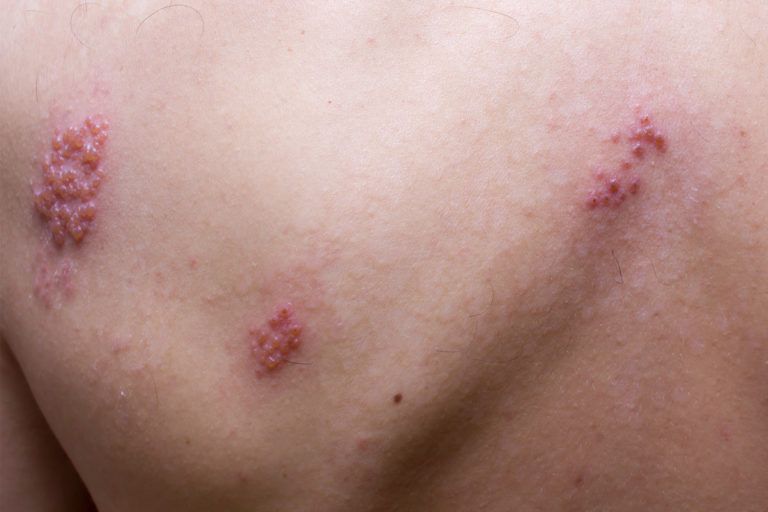
Shingles are another of those nasty herpes infections (when WILL they end?) spoken of in hushed tones in doctor’s offices and bathrooms everywhere. Painful and unsightly (and dangerous), shingles are a nasty (usually) adult-onset result of the same virus that causes chicken pox in kids. The fastest way to get rid of shingles is get yourself to a doctor as soon as you experience symptoms, and use the natural and home treatments below to relieve your symptoms until they go away for good.
Causes and Symptoms of Shingles
Symptoms
Shingles usually appear as a rash on one side of your body, an important diagnostic fact. Pain is usually the first and most severe symptom of shingles (even before the rash appears), followed by some or all of these symptoms:
- burning, tingling, and high sensitivity to touch in certain parts of your body
- red rash
- fluid-filled blisters that eventually burst and scab
- over extreme itching
- headache
- stomach ache
- fever and chills
Causes
Shingles, or herpes zoster, are caused by the varicella-zoster virus — the same virus that causes chicken pox, and part of the herpes family that causes cold sores and genital herpes. Shingles manifest as a painful, blistering rash, usually covering on one side of your chest and back, but can spread to other parts of your body as well.
You may be susceptible to shingles if you had chicken pox as a child and the virus is still dormant in your body. Older adults and adults with compromised immune systems are also susceptible to shingles. Other factors, such as stress, can also contribute to the onset of shingles.
Best Shingles Treatment
As soon as you think you have shingles, see a doctor for medical treatment.
There are plenty of home remedies for the pain of shingles (see below), but to really get rid of your shingles you’ll need to receive professional medical treatment. There are a variety of medical treatments (see bottom paragraph) you can receive to speed the healing and relieve the painful symptoms of your shingles. It is especially important to visit a doctor if you have shingles near your eyes (infection can cause permanent damage), or if you or anyone close to you has a compromised immune system.
Use OTC non-steroidal anti-inflammatory drugs (NSAIDs) to relieve the pain of shingles.
NSAIDs like ibuprofen, Motrin, and Advil will relieve some of the pain and swelling of your shingles rash. Be sure to take only the recommended dosage; taking too many NSAIDs can lead to further health complications such as stomach ulcers and bleeding.
Apply an anti-itch cream or lotion to your shingles rash to relieve pain and itching.
Calamine lotion or an OTC cream containing at least 1% hydrcotrisone should effectively relieve the itching of your shingles rash. Products like Aveeno Maximum Strength Anti-itch Cream(sold at Amazon) or Cortaid Maximum Strength Anti-itch Cream are available without a prescription in most drug stores. If the itching of your shingles rash is especially severe, you may want to take an oral anti-histamine, such as Benadryl.
Clean your shingles rash and blisters with soap and water once or twice a day.
Use lukewarm or comfortably cool water and an antibacterial soap with drying action to gently wash the infected area. Take care not to scrub vigorously or spread the infection to other parts of your body. After washing, gently rinse your shingles rash and allow it to airdry; for faster healing, don’t bandage a shingles rash.
Keep your rash cool to relieve pain and itching from shingles.
Use a cool compress or slightly chilled ice pack to cool your rash, relieve symptoms of burning or tingling, and stop yourself from itching more and worsening the infection. Soaking in a lukewarm or comfortably cool bath is another option for chilling your shingles rash.
Natural Remedies for Shingles Pain
Soaking in a comfortably cool oatmeal bath can relieve symptom of shingles. Cool bath water can relieve the itching of your rash, and uncooked oatmeal, colloidal (ground) outmeal (made specifically for bathin), or even baking soda will sooth your skin even more. You can get >Dr. Teal’s Colloidal Oatmeal soaking solution at Amazon.
Add vinegar to a cool water compress for additional shingles relief. You only need to add a little bit of vinegar (1 part vinegar to 32 parts water) to a cool compress for more itching and burning relief.
Medication for Shingles
Doctors generally use three treatments for shingles: high doses of prescription anti-viral drugs such as Zovirax, Valtrex, or Famvir to relieve the severity of your symptoms; prescription strength anti-inflammatory drugs (prednisone) to reduce rash inflammation; and, for extreme pain, prescription-strength pain relievers (usually narcotics).
Most cases of shingles will heal on their own, especially with consistent use of the home shingles remedies discussed above, but it’s still wise to see a doctor within three days of a shingles outbreak for the fastest shingles relief. Medicated treatment will relieve and diminish your symptoms faster.
