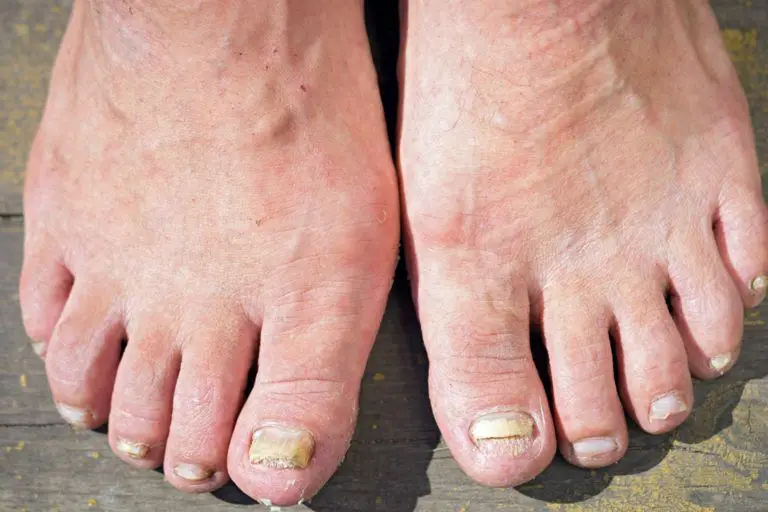
Given their location, it’s easy to overlook your feet when it comes to hygiene. I for one don’t look at mine too often during the day. But your feet are important, and it’s nice to show them some TLC and keep away fungus, stink, or any kind of unsightliness. Onychomycosis (better known as toenail fungus) is one of those things that can sneak up on you and get out of control. One day you might notice a discolored spot on your toenail. The next time you look you could have a yellow monster (well, five monsters) on your hands. Well, on your feet. This can happen when some sort of dermatophyte (fancy talk for kinds of fungi) or yeast has wormed its way under your nails and taken up residence. These like warm, wet places…just like the one in your nail bed. For minor cases, this just means you have ugly toes. But it’s possible for the infection to get out of control and become painful.
Symptoms
Initially, a fungal infection in your toenail can be identified by small whitish or yellowing spots toward the outside of the nail. If you head to a doctor at this point, it’ll be easier to beat. Signs of deeper infection include:
- Thick toenails
- Brittle or frayed toenails
- Dark coloring
- Warped shape
- Dingy appearance (no sheen to the nail)
- Pain (in advanced cases)
- Bad smell (other than usual foot odor)
Best Remedies for Toenail Fungus
Avoid and minimize toenail fungus by keeping clean.
I hope you clean yourself on a regular basis anyway, but keep your feet and toenails clean, dry, and groomed. Dryness is a big one since fungus likes wet places more than dry ones. This includes keeping dry from water and sweat. Change your socks often (try the moisture-wicking variety) and wear dry shoes (or open-toed shoes if you have really sweaty feet). Keeping your feet dry and clean will not only help with the toenail issues, but it will also help you prevent toe jam.
It’s also a good idea to stick to clean places. Beware of public pools, showers, and the like. Bust out the shower shoes for these places, because they can cause all kinds of problems if you just happen to be following the wrong person around who is a spreader of fungus.
Smart foot care can prevent fungal infections or lessen the severity of one that already exists.
I mean don’t beat up your feet. If they do get scraped up at all, especially around the toenails, clean the cuts. Breaks in the skin make it easier for fungus to invade. Also, nail polish traps moisture, which makes fungus more comfortable, so knock that off. And then there are over-the-counter anti-fungal powders and things that you can put on your feet or in your shoes. This is a good option if fungal infections are repeat offenders for you.
Try an oral medication to kill your infection.
Head to your favorite physician for this method. Active ingredients will most likely be terbinafine or itraconazole. Essentially, these aid healthy new nail growth and prevent the infection from spreading. The drawback is that you won’t be completely fungus-free until it’s all grown out, which can take several months for some more extensive infections. There can also be side effects. The most severe includes liver damage. Personally, I’d take some fungus over that, but discuss options with your doctor.
There are also topical medications available to manage toenail fungus.
These can be a cream or even an anti-fungal nail polish called ciclopirox. They are a less effective option and are often prescribed along with oral medication. Toenail fungal infections are harder to get rid of because the nails are thick and slow-growing. Your doctor might file your nail down to make it easier for the medicine to penetrate your nail. If you go this route, you can get Kerasal Fungal Nail renewal Treatment at Amazon. There are also things to try at home. Although there’s no medical proof for their effectiveness, some swear by ’em. See the bottom section for more info.
Some toenail fungus requires surgical removal.
This is pretty rare, but if you really let things slide you might find yourself here. The surgery would remove your entire nail, giving it a fresh fungus-free start. Your doctor might also have you apply topical medication after the removal. You’ll have a strange looking toe for a long time (toes weren’t meant to be naked). It usually takes around a year for a toenail to grow in completely. Toes just look lost and alone without their toenail attached. Try not to let it come to this because it’s painful and horrible.
Toenail Fungus Cures (or Lack of Them)
Toenail fungus can be a hard nut to crack. It’s thick, slow, and stubborn. Just like that guy at the office who you can’t believe still has a job. But he’s still there, just like your ugly toenail. The suggested home remedies may or may not work for you. Your doctor is really your best source of help and it’ll be much easier to get rid of a small infection than a brittle, cracking, discolored nail. So go in as soon as you suspect a fungal infection. Prescribed medications and creams have been known to fail sometimes, but it’s better than nothing. There are also relatively new laser treatment out there, but those might not be available depending on where you live. You really just need to be diligent and patient, keep up with your treatment, and don’t be disappointed with delayed results. If the infection isn’t causing you pain, you always have the option of just living with it. But you’ll have to accept that nobody may ever want to rub your feet again.
Best Home Remedies
Vinegar. Vinegar has been known to stop certain kinds of bacteria from growing. Depending on what is causing your infection, it might not work. Soak your feet for 15 minutes a day (at least a few times per week) in a mix that’s ⅓ vinegar and ⅔ water. Rinse and dry thoroughly afterward.
Chest rub. That’s right. The stuff that feels so great during a chest cold might also kill your toenail fungus. Vicks VapoRub, or whatever brand you prefer, can be applied once a day to the afflicted area. It may be several months before things clear up. Again, this might not work for everyone. But if you want to try it out, Amazon sells Vicks Vaporub.
