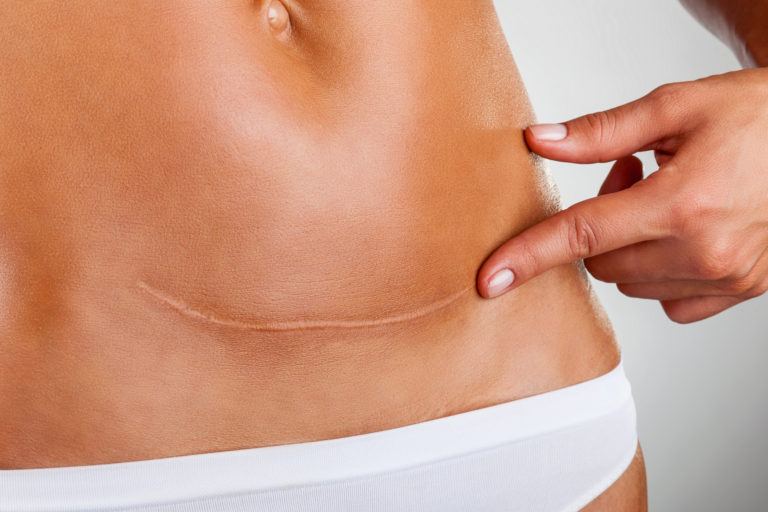
I wear my menagerie of scars proudly. I’ve got zippers from surgeries (too much basketball). My hands, if you look closely, are speckled with tiny burn scars from my unhappy days preparing Happy Meals. The line on my forehead reminds me of the time I was bitten by one of my peers who, coincidentally, was known for his conspicuously large chompers. Another raised line near my scalp recalls the time I clumsily dove into the shallow end of a pool. My stupidities, tribulations, and humanity are writ in scars all over my body. While time has rendered some nearly imperceptible (time gets rid of scars on the cheap), I wouldn’t want to erase these imperfections. They are part of me and my story. However, some folks take a more negative view of their own battle history. Read on to learn about how to get rid of scars.
That being said, I have other vanities and can understand why someone might want to learn how to get rid of scars. I realize that there isn’t anything inherently sexy about a zipper running across one’s stomach. Being called “Scarface” is only cool if you’re an immensely powerful Cuban drug lord. In this article I’ve outlined how to get rid of scars of all types – burn scars, acne scars, keloid scars, surgery scars, and all the other scars that can be had through life’s misadventures.
About Scars and Scar Tissue
Scars form when wounds penetrate to the deeper, thicker layers of skin (dermis and hypodermis). The scar tissue – made of tough, fibrous cells called fibroblasts – will differ from the skin it replaced in appearance and quality. It won’t be able to produce sweat or hair, and it will be more susceptible to sun damage. Scars are a natural part of the healing process. While not pretty, they keep our insides on the inside.
Smoking and Scars
Smoking decreases the amount of oxygen in the blood, which significantly slows healing body-wide. Furthermore, nicotine constricts blood vessels and thus reduces blood flow, especially to the skin. No doctor worth her lab coat will allow you to undergo surgical scar removal of any kind until you quit, as it undermines effectiveness, complicates anesthesia, and increases the risk of infection. Don’t fret. Research shows that your body will begin to heal normally in as little as four weeks after quitting.
Best Ways to Treat Scars
Early wound care can lessen the severity of scars.
It is far more difficult to get rid of scars than it is to prevent – or at least limit – their formation. First of all, keep your wound clean and covered. Infections lead to more severe scars. The bandage or covering will keep the wound moist, which has been shown to speed up healing. Allow the wound to fully heal before starting treatment and avoid picking at scabs. Once the wound has healed, moisturize the scar regularly. Most importantly, protect the scar from the sun. Scars have less pigmentation and burning will put a stop to healing and make the scars much more noticeable, and the damage can be permanent (hyperpigmentation).
Massage can help get rid of new scars and prevent the buildup of scar tissue.
This is one of the best ways to get rid of scars from surgery or accidents. Massaging with moisturizers will increase blood flow to the scar, which will speed up healing, increase collagen production, as well as ensure an even distribution of collagen. It will also keep the scar moist and prevent a loss in skin elasticity. Press on the scar until it becomes white and massage in all directions – vertically, horizontally, and in circles. Most topical scar treatments are massaged into the skin. As many double blind studies have shown, it is the massage, not the topical treatment (vitamin E, onion extract…etc) that gets rid of scars.
Topical scar creams don’t get rid of scars…at least not as advertised.
Vitamin E oil, onion extract cream (Mederma), Vitamin C ointments, scar creams – none of these treatments has much of a foundation in terms of scientific research. What little research has been done is not promising. Topical vitamin E is more likely to cause an allergic reaction (contact dermatitis) than to get rid of scars. Onion extract was outperformed by simple slatherings of petroleum jelly in a double-blind study. I’m not saying they are completely without merit – some will reduce redness and some will relieve itching. Some will work because of the moisture and massage supplied through application, but in that case, why not just uses moisturizer or petroleum jelly? If you would like to try a commercial option, Amazon sells Scar Zone cream.
Silicone sheets, gels, and cushions have been shown to get rid of scars to some degree.
Silicone sheets and gels have been used to get rid of scars since the 80s, though just why they are effective isn’t yet known. Some theories suggest it is the pressure and moisture supplied by silicone. Other theories point to static electricity (really). Silicone scar treatments work, but they take time and discipline. They must be worn for at least 12 hours daily for up to 12 weeks – a regimen that will test your patience and desire to get rid of scars.
To get rid of scars, you’ll need to see a dermatologist.
With the amount of research underway, the medical landscape of scars and scarring is certain to keep changing in the coming years. If you want the best, most effective treatments, you’ll need to see a professional. If your scars require something a bit more intrusive, like surgical scar removal, dermabrasion, laser resurfacing, steroid injections…etc – then a dermatologist will be able to refer you to the right people. Lastly, a PhD is the best defense between you and the hordes of scar creams and snake oils that serve only to lighten your wallet.
Medical Procedures for Scar Removal
You’ve tried the topical treatments, the gel sheeting, eating right, even praying. You’ve noticed, after a year of waiting, that time is not sufficiently fading that scar. Well, there are many procedures and operations that can effectively get rid of scars. Some treatments – including dermabrasion, laser resurfacing, and chemical peels – involve removing the outer layer of skin. Over a period of time, new, more naturally pigmented and contoured skin takes its place. Surgical scar revision involves actual removal of the scar. Yes, this will create a new scar, but its shape or direction should be less noticeable. Other options include collagen fillers, grafts, and steroid injections. On the horizon, more sophisticated lasers and drugs (Avotermin) are set to revolutionize scar treatment in the coming years.
None of the procedures available today will completely erase scars, nor should any treatment be considered lightly. According to the American Society of Plastic Surgeons, even when these procedures are performed correctly by a qualified professional, complications are possible. What’s more, insurance companies are not known to be generous when it comes to scar removal. Weigh your options carefully with your doctor and a dermatologist.
Get Rid of Scars Naturally
Lemon Juice.
Lemon juice is an age-old scar remedy. Lemon juice is citric acid (an alpha hydroxy acid) that exfoliates as well as many commercial products. It works by removing the upper, damaged layers of skin so newer, hopefully less scarred skin can take its place. It also helps to soften and lighten the tough fibroblasts that scars are made of.
Essential Oils.
Lavender oil and helichrysum oil have both been used as natural scar treatments. Like most alternative medicines, support is anecdotal, but if you use either as a massage oil for your scar you’ll certainly see some benefit. Linalool, the active ingredient in lavender oil, has a toxic effect on fibroblasts (the cells scars are made of) and literally causes them to die. Helichrysum oil, derived from helichrysum italicum, is obscenely expensive yet many aromathrerpists attest that it is the best natural scar treatment. It both stimulates regrowth of tissue and fades old scars. Vendors of such oils (natural healing or whole foods stores) will have recommendations for application.
Manuka Honey.
Manuka Honey is a medicinal honey used to treat wounds and burns. In clinical studies it has been shown to reduce scarring and infection when used early to treat wounds. Honey may work to reduce old scars, as it has a high vitamin C content. Though more research is needed, stable forms of vitamin C may increase collagen production and smooth scars. This sounds like a messy scar treatment to me, but it could be made splendidly dirty if you get your partner involved. But that’s for you behind closed doors, we just want to help. And to do that, you can find Manuka Doctor Bio Active Manuka honey at Amazon.
Makeup (camouflage).
There many great makeup tutorials on the web that focus on masking scars and blemishes. By hiding your scar (as opposed to removing it surgically) you reserve the right to use it when it’s needed. Looking as though you’re a barroom pugilist or enjoy the occasional knife fight may come in handy when discussing your point of view with your boss, spouse, neighbor…etc.