It's true that the lady bugs you want to get rid of aren't actually lady bugs. Well, they are, and they aren't. Most of the problems you're seeing with migration of lady bugs indoors aren't caused by the native species of lady bugs in your area (though there are those). Most lady bug problems and infestations are caused by the multicolored asian lady beetle, imported by the government at the beginning of the 20th century to help reduce the populations of tree-killing aphids. A lot of people harbor the misconception that lady bugs and asian beetles are pests, or that the asian beetle is a pest and the lady bug is not. The truth is, neither beetle is a pest; they both feed on aphids, which, if you're a gardner, you know are one of the most common and most harmful garden pests. Lady bugs and asian beetles eat aphids. In fact, some gardeners actually have bags of lady bugs shipped to them so they can do a controlled release.
Nevertheless you came here to get rid of lady bugs. Though you can't ever get rid of lady bugs or get rid of asian beetles, there are some things you can do to control their migration indoors and their populations outdoors.
Getting rid of lady bugs
Screen doors, window screens, and screened in porches should be inspected and properly sealed if you want to get rid of lady bugs. Perhaps the most common way for lady bugs to get into your home is through a crack in your screen windows or through a screen door that doesn't properly fit the frame it's resting in. Weather stripping is probably the cheapest way to seal screen doors, while a torn window screen will probably require a new screen. Luckily for you, screening is cheap if you choose to repair it yourself, and standard-sized window screens are cheap if DIY window repair isn't your cup of tea.
Door frames, window frames, and siding is the next thing you'll want to seal to get rid of lady bugs. Some lady bugs are just too stubborn to take the easy way indoors, and instead they will try to get in through the siding of your house. Either inspect and seal the siding yourself, making sure to seal siding that surrounds things like air vents and piping, or have a professional siding company come in and do the job for you. Either way, preventing the migration of asian beetles and lady bugs indoors requires that you bar any entrance from outside into your home. You may even want to consider temporarily blocking your roof vents when the weather starts to get colder.
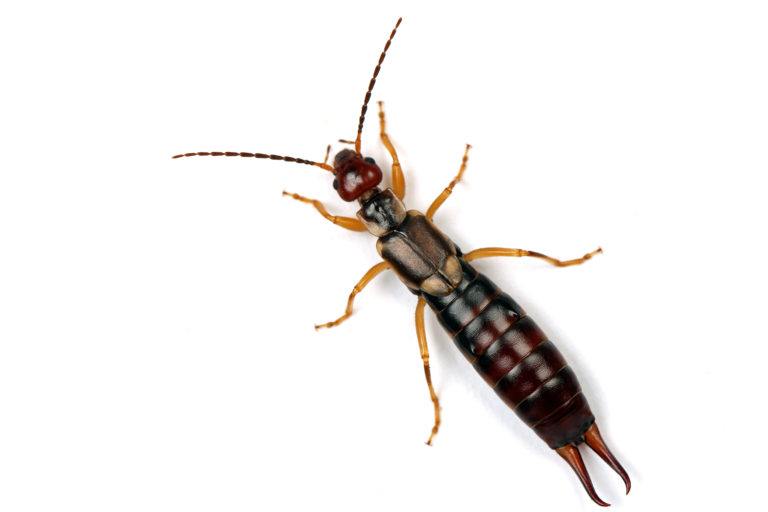
Landscaping professionals have noted that lining the immediate perimeter of your house with food grade diatomaceous earth will get rid of lady bugs. Diatomaceous earth is a natural pest deterrent that I've been pushing in my articles for quite some time. It comes from fossilized algae that are mined and then eithe refined for medical purposes or bagged for landscaping and pest control needs. The most popular theory regarding diatomite's effectiveness suggests that it is the microscopically, razor sharp composition of the algae that cut through the exoskeleton of the intruding insect, causing death by dehydration. This strategy of lining the sides of your house with this sediment with diatomaceous earth has been recommended to help control earwig populations, and I would recommend it as a possible way to control lady bug populations as well.
The Ohio State University Extension office suggests using a long-lasting pesticide to help prevent lady bug migration. They suggest that such a pesticide (usually a pyrethrin or pyrethroid) be applied to outside walls and siding, as well as around eaves, attic vents, roof overhangs, and doors and windows. Pyrethrin is one of the most commonly used insectides on the market today, and the variants of it (called pyrethroids) are abundant as well. Usually this is mixed with a carrier substrate which acts as a light adhesive, binding the pyrethrin to the surface it is sprayed upon. Lady bugs that come into contact with the substance die shortly afterwards.
The Ohio State University Extension office also offers a quick and effective way to control lady bug populations indoors as well. I found this trick to be particularly clever. What you do is take the hose to your vacuum and stick a nylon down it, and sealing the nylon to the vacuum hose with a rubber band. What you've done, essentially, is to create a filter on the end of your vacuum hose. Then all you do is go around the house on a particularly "fruitful" day for lady bug migration and vacuum them up. They get trapped in the nylon, which is then removed, tied, and throw in the garbage--or you can empty the nylon somewhere far away from your home. This is probably the most effective and least ecologically destructive way to get rid of lady bugs.
The Ladybug Killers & Ladybug Control
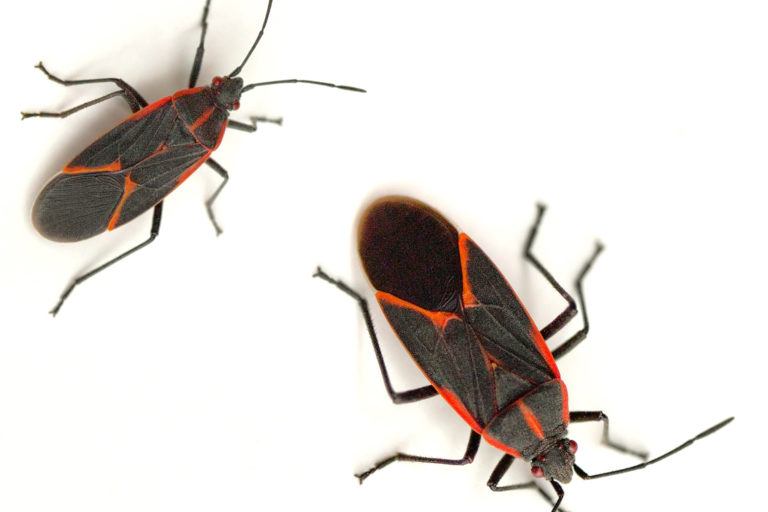
Since all of the hype surrounding the spike in the populations of asian beetles (multicolored asian lady bugs) started, a lot of companies have popped up claiming that they have the perfect lady bug control. I can't advise you to purchase any of these products because I've never used them. Lady bug control in the spring and fall is a lot like box elder bug control; there is no certain poison designed specifically to kill either pest. Some pest control professionals recommend using lady bug traps in what is called a "push and pull" strategy. Essentially, a toxic chemical is used to push the lady bugs out of the places where they're hiding and a trap filled with lady bug attractants (usually sold with the lady bug trap) are then used to remove the lady bug. I assume that this strategy would work from a logical stand point, but again, I've never tried it. Though perhaps I'll purchase a trap for use this spring. Until then, if you want to try some of the lady bug control devices offered, please let me know how they work. I may use your testimonials in a subsequent update of how to get rid of lady bugs.