March 1st, 2009
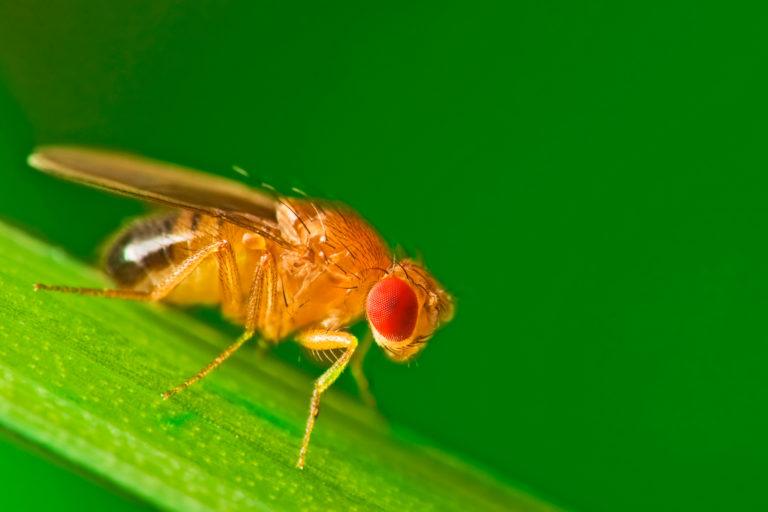
We all remember fruit flies (Drosophila spp., usually melanogaster) from our days in school when we mixed up that delicious concoction of gelatinous goo for them to lay their eggs in so their larvae would have something to eat when they hatched. It was a hell of a good time. We got to watch fruit flies mate, lay eggs, hatch, eat their little hearts out, metamorphosise, and start all over again. Even more fun, for me at least, was gassing them, counting them, and looking for and recording mutations through the generations. Sadly, though, that was my first and last enjoyable experience with the fruit fly. After I moved out of my parents' place, I had the freedom to be a slob, not do my dishes for weeks, and leave anything I wanted laying around for as long as I wanted. Bad idea.
Turns out my new-found freedom was allowing me to inadvertently create a haven for fruit flies (not fruit flys) and fruit fly reproduction. I learned the hard way that fruit flies are pretty fond of not only lab-created gelatinous goo, but also large food-like messes, especially, as their name suggests, old fruits and vegetables. It doesn't stop there, though. Fruit flies are attracted to, and will lay their eggs in, almost any form of moist decaying organic matter. To make matters worse, they can lay in excess of 500 eggs at a time. That being said, you can see how swarms of the things can appear in your home virtually overnight and, if not taken care of promptly, can rapidly increase their numbers exponentially. While they are a year-round problem, they tend to be worst in late summer and early fall. But since you're probably getting impatient with my biology lesson, allow me share a few things I was forced to learn, and let's start killing fruit flies.
Fruit Fly Control
Find and remove all food-based breeding grounds. Start in the kitchen. Dispose of any overripe fruits or vegetables. Cover fruit bowls or, better yet, put them in the fridge. Do the dishes. Fruit flies will lay eggs on leftover plates and in dirty glasses. Search through every cupboard and check for wet or infested grains, crackers, potatoes, pastas, beans, etc. If it looks questionable, get rid of it. Take the garbage out immediately. Search the entire house for other food messes. Pay special attention to kids' rooms. Look under beds and in closets for dirty dishes. Wash all sponges, dish rags, and towels. Sweep and mop, dump mop water, clean bucket, and wash mop head.
Find and remove all other breeding grounds. Once you have disposed of all their favorites, fruit flies will be forced to find alternatives. You will need to find and take care of these as well. If you have one, start by cleaning the dishwasher. Clean inside and out and get all excess food and liquid. You will want to do dishes by hand until the fruit fly infestation is gone. Clean under the stove and under the oven. Clean the seals on the fridge and freezer doors. Because fruit flies will eat nectar and like moisture in soil, potted plants and flowers should be taken outside. Check under sinks for drips and rotten wood. Clean drains and garbage disposals. Make sure there's no wet lint around and under the washing machine.
Proper storage measures. Once you have done everything you can think to do to remove breeding grounds for fruit flies, the last thing you want to do is allow them to destroy even more of your good food. Do yourself a favor, and go to the store and get some good canisters, cans, or plastic storage containers with tight-fitting lids for food products like grains, pastas, cereals, beans, peas, flour, crackers, and anything else that might attract fruit flies if it gets damp. If you run across something that you're not sure about, put it in a container. Better safe than sorry. Be sure to also get a garbage can with a tight-fitting lid.
Exclusion measures. Once you have done everything you can think of to get rid of fruit flies in your home, it's time to do whatever you can do to keep them from getting in again. First thing's first. If you have trash cans sitting outside, start keeping them as far from the house as possible. If you have a compost pile that you throw food waste in, either stop doing it or at least make sure to immediately cover it up with yard waste. Patch any holes in window screens. Keep doors closed. Look for and fill any cracks around doors and windows.
Alright, you've done it! Now set a timer. Just because you're no longer seeing any evidence of fruit flies does not mean that you've won the battle. Under normal temperature conditions, it could take anywhere from 7 to 14 days for fruit flies to move from egg to adult. So don't start celebrating until at least two weeks have passed. In the meantime, keep up on sanitation. You don't want any new adults that might emerge to have a playground for their silly sexcapades. After the two weeks have passed fruit-fly free, have yourself a nice celebratory beer.
How to Kill Fruit Flies with Commercial Goodies
Because fruit flies are so common, there are quite a few different commercial products for killing fruit flies. Probably the most common of these is fruit fly traps. Most of these are little plastic or cardboard units filled with sticky stuff and an attractant like vinegar or fruit scent. The can be placed almost anywhere. A couple good examples of these are Natural Catch Plus Fruit Fly Traps, Vector 960 Fruit Fly Trap, and Banana Scent Fruit Fly Trap. There are even some electric fruit fly traps that plug into an ordinary outlet like the FlyWeb Fly Light and the Insectalite 30 Watt Professional. These use a little lamp to lure fruit flies in where they get stuck to a glue board. And, of course, you can't forget about good, old-fashioned fly strips. If you're looking for something to hit 'em with in flight, there are also numerous pyrethrin sprays available like Clear Zone I Pyrethrin Aerosol, CB Intruder HPX, and Microcare Aerosol. If you're looking for something to dump down the drain to kill fruit flies, I would suggest InVade Bio Drain Gel or DF 5000 Drain Gel.